

Western Red Cedar Thuja pilcata
The Western Red Cedar is native to western Canada and the USA and is called the “tree of life” by the indigenous tribes of British Columbia, Canada and used as the emblem. It is held in highest reverence by all northwest coast tribes for its healing and spiritual powers.
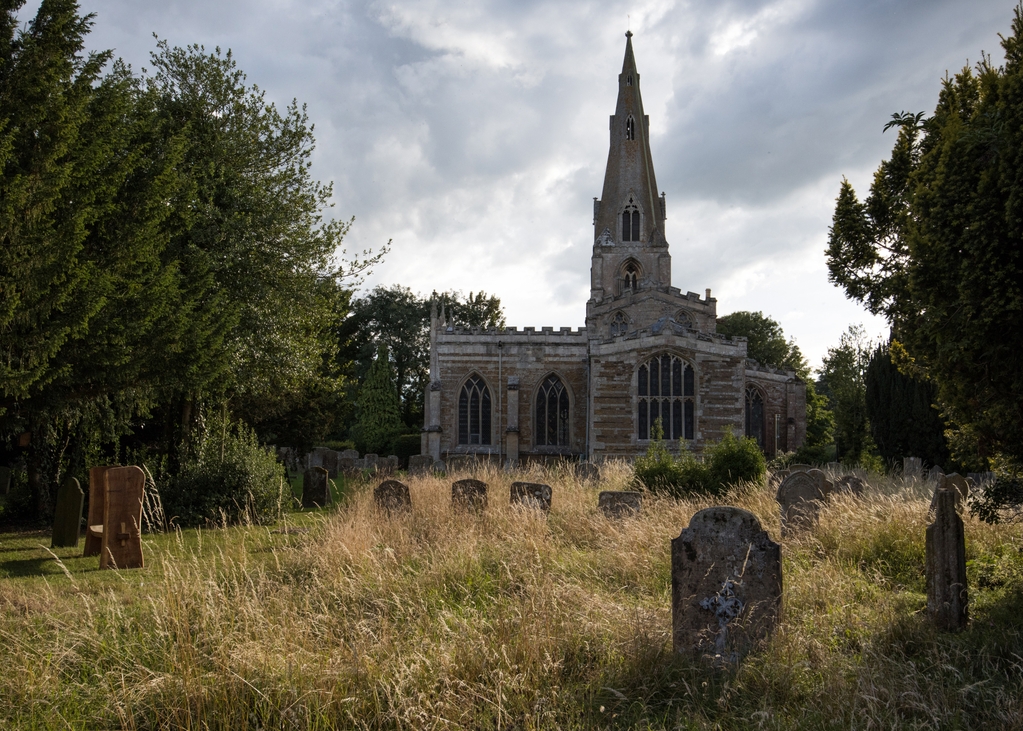
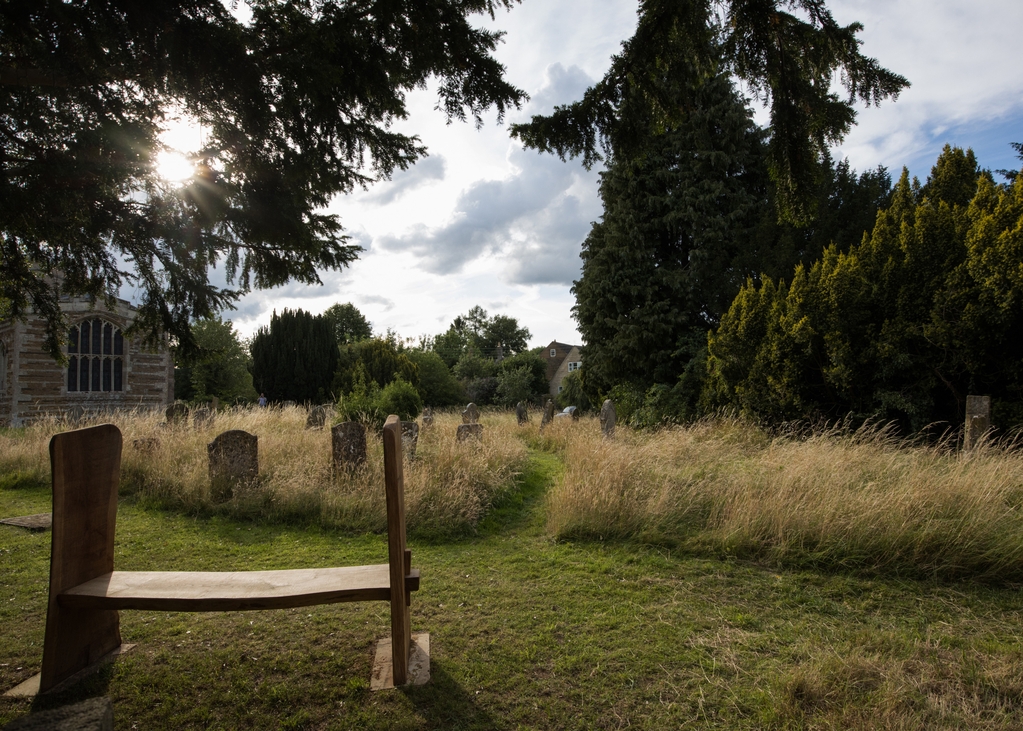
Langham St Peter’s & St Paul’s church yard holds two semi-mature Western Red Cedar trees. They are east of the church, close to Church Street and catalogued by Rutland County Council tree warden as 01GA and 01GD. One is immediately infront of the small oak bench dedicated to the memory of George and Essie Denison. The other is just to the north of the bench, with a large yew tree immediately behind the bench. It is said to be a very strong tree. Tales say that a person could receive its strength just by standing with their back to the tree. This is worth experiencing the next time you pass the trees. One has its lower trunk exposed and is certainly warm and comfortable in its leeward side.
These are notable tall, concial-shaped evergreens with end tendrils of small conical seed cones in autumn which point upwards in groups. The flat sprays of foliage smell sweet of pineapple when crushed. The bark is soft and fibrous. They are likely the tallest trees in the church yard.
Western Red Cedar wood has been used to make furniture but also the bark and roots are used for domestic items such as costumes and head dresses for ceremonies, ropes, baskets and blankets. The wood was used in the curing and cooking of fish. It contains a natural preservative which is resistant to fungal attack.
The tree can live for up to 1000 years and can reach around 65 metres height. The current largest known Western Red Cedar is in Canada, called the Cheewhat Giant. It is on Vancouver Island and is 55.5m height and 6.1 diameter.