




Introduction
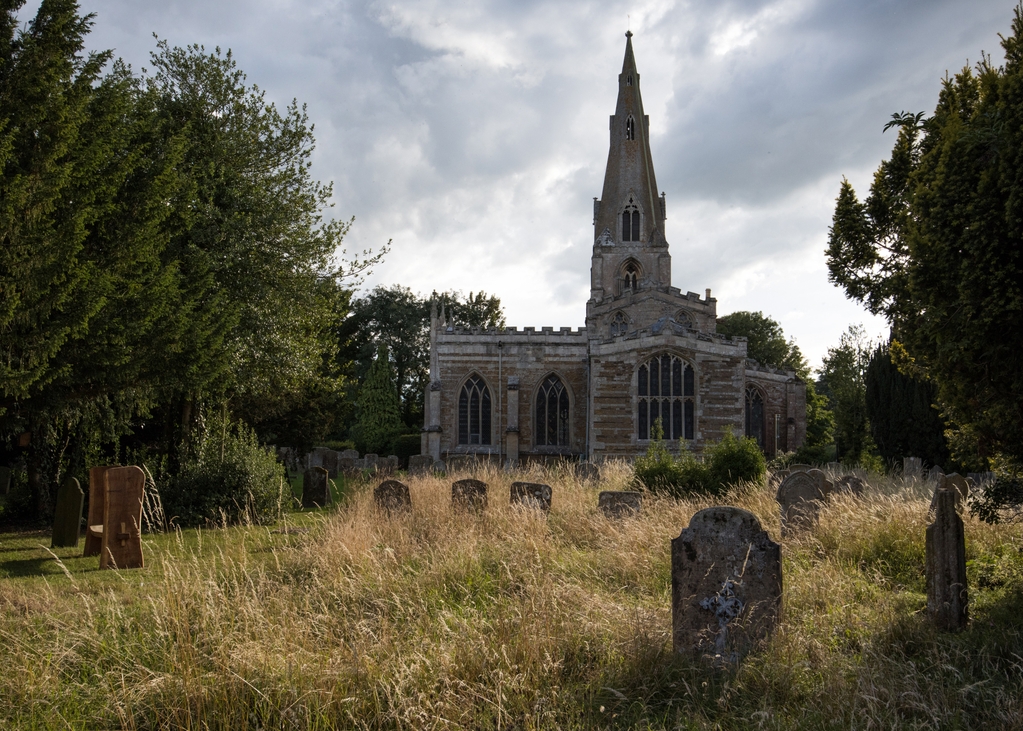
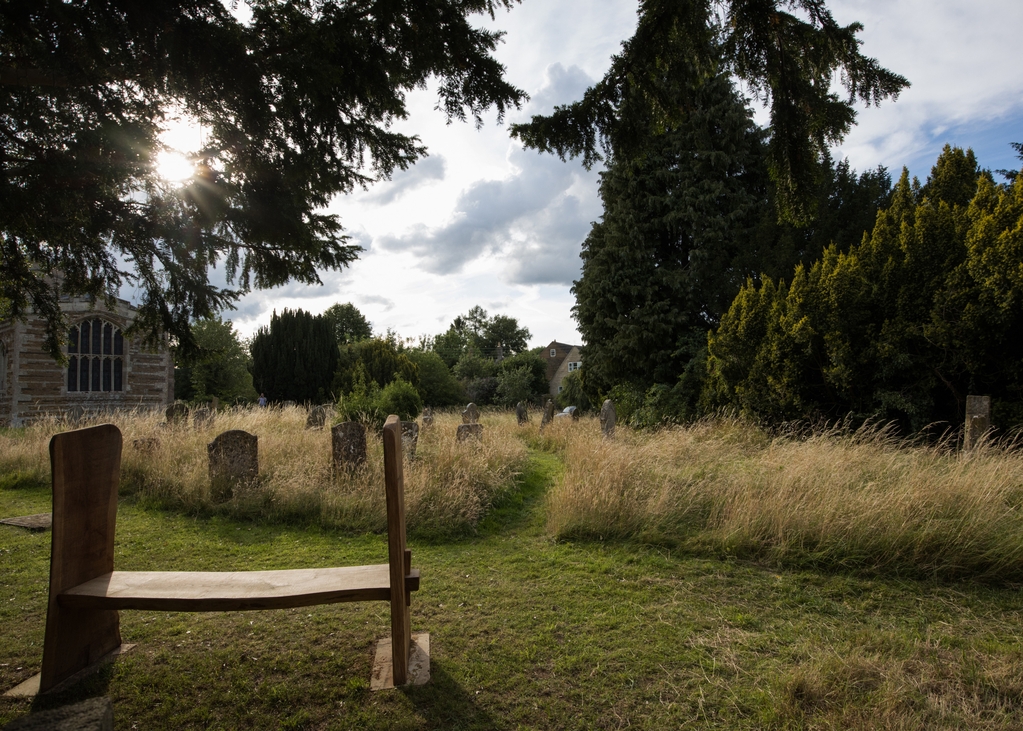
Langham church yard is a 0.7 Hectare site, of which the eastern half is managed for wildlife. The grave yard has a mix of plots with headstones, unmarked and some with kerbed edges. There are mature trees, impressive yew balls, ivy balls, semi-improved grassland with paths mown through and surrounded by a stone wall.
In 2019 a group of volunteers commenced managing the church yard for wildlife, creating a living church yard following excellent advice from Caring for God’s Area, Wildlife Trusts and Plantlife. With the project now entering its seventh year, we hope it will continue to improve. In particular, the soils being relatively undisturbed for hundreds of years have the potential to be a good waxcap grassland. Waxcap fungi and their close relatives (the CHEG family) only live on mossy soils which have been left undisturbed for at least 50 years.
We hope to be selected by Leicester and Rutland Wildlife Trust as a suitable location for the translocation of glow worms. These are rare beetles which get their name from the bioluminescence of the females. They need uncut meadows as habitat.
Key management progress in 2025
1. Cutting of a line of turf alongside the footpath from New Lane to the church and sowing with wildflowers. Signage to stop Council contractors from strimming.
2. Translocation of yarrow and hemp-agrimony from Oakham All-saints flower bed.
3. Trimming self-sown rose and bramble from a yew ball and trimming the lower branches.
4. Lammastide annual cut of the meadow by 20+ volunteers followed by a BBQ with the pile of cuttings kindly collected by a Parishioner
5. September mow of a new area of grass and sowing with yellow rattle, followed by a further mow in February to ensure enough light for the germinating yellow rattle.
6. Un-attended kerbed graves – selected 3 to weed, add low-nutrient topsoil and sow with native wildflowers. Signage to stop Council contractors from strimming.
7. Tending to Garden of Remembrance flower beds.
8. Swift caller installed and operational all summer to attract passing swifts to the nest box installed in the church spire.
9. Wildlife management plans and seasonal news published on A Church Near You https://www.achurchnearyou.com/church/10812/
10. Maintaining bird feeders with various seed mixes.
Key biodiversity seen in 2025
Biodiversity records are listed and verified on the Naturespot website. This organisation is dedicated to the Vice County VC55 for wildlife records and are issued to the Leicestershire Record Office as a permanent record. The church yard is listed as a Wild Place. Naturespot records for the church yard are now 200 species which is an increase of 46 species from two years ago.
The long grassland meadow was full of insects in summer. The highlights were a good colony of Common Blue Butterflies and new sightings of Brown Argus butterfly. Few traditional meadow species such as Meadow Brown, Ringlet and Gatekeeper were seen this year. Butterfly Conservation has indicated the very dry summer was to blame, with a lack of fresh vegetation for caterpillars to feed on.
For the first time a number of new records of waxcap species were seen in Autumn including beige coral, Blackening Waxcap, and a yellow spindle. Several Snowy waxcap and Butter waxcaps were found, as per last year.
A Barn Owl was spotted hunting in the meadow one evening. The ant hills in the meadow attract Green Woodpeckers. The occasional Peregrine Falcon, Red Kite and Buzzard pass over. We hope the Tawny Owl nest box will be used by a Tawny Owl one day. We think Grey Squirrels used it as a dray this Spring.