


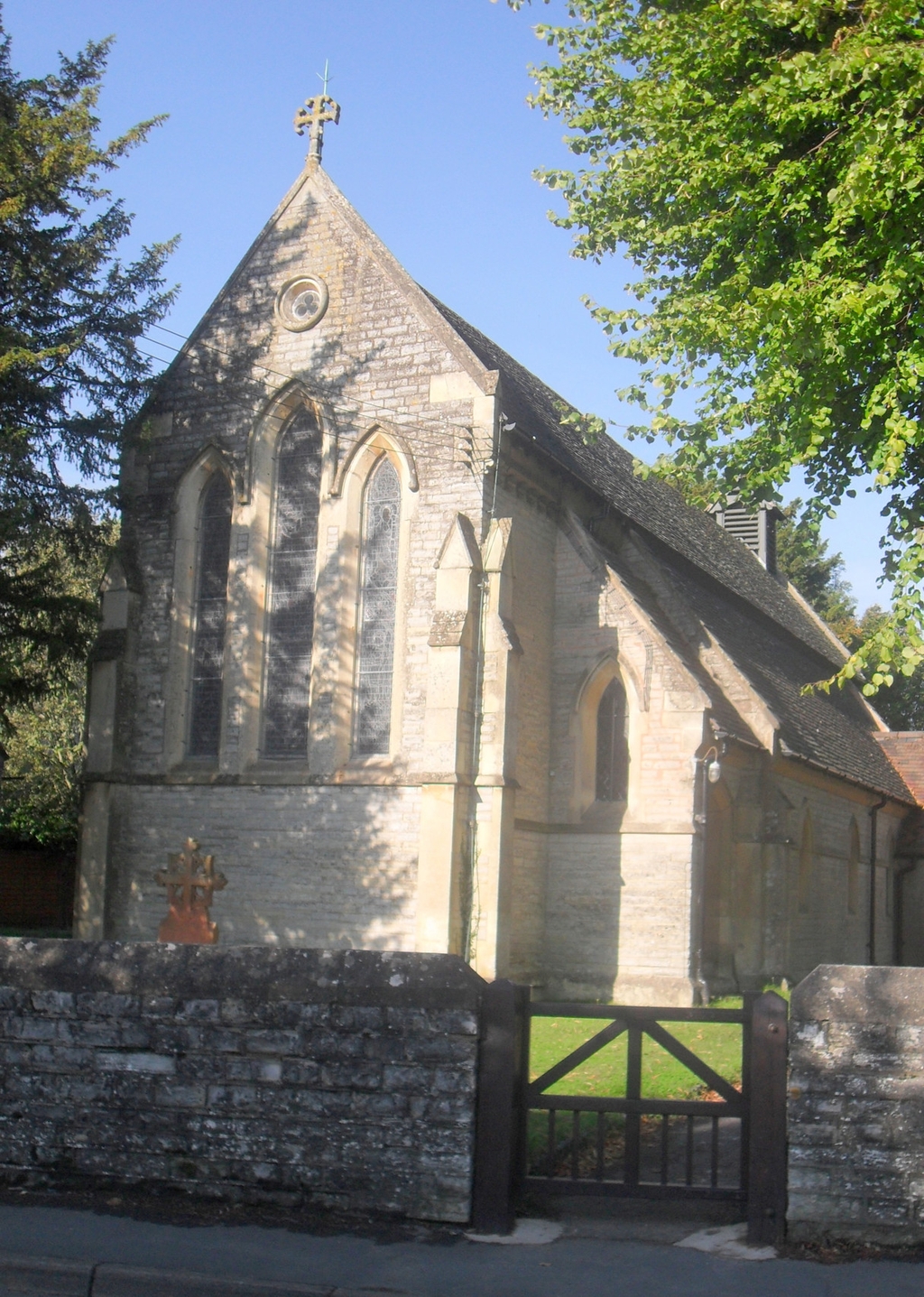
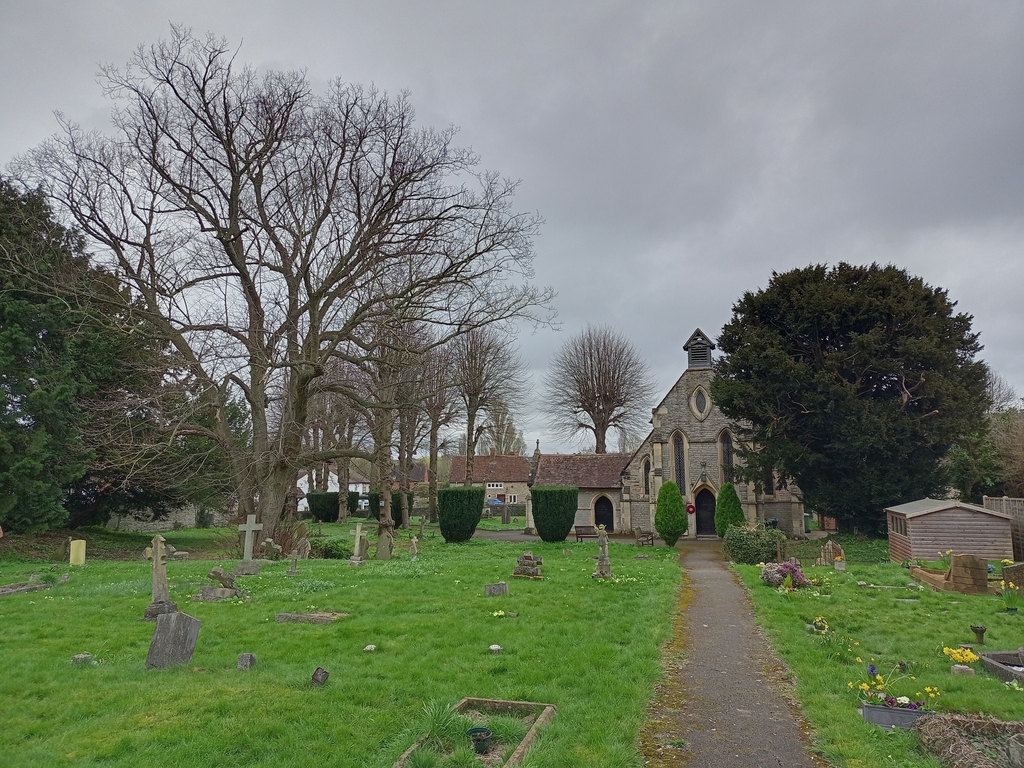
St Andrew’s Church is in the rural Warwickshire village of Wilmcote, a charming location dating back to medieval times. The village has attracted visitors for many years, their interest enhanced by the fact that Mary Arden, the mother of William Shakespeare, was born here in around 1540.
Though built less than 200 years ago, St. Andrew’s is one of the most historic and significant churches in England. It was originally created as a focus for a vital new development in the Anglican church, the Oxford Movement, also known as Tractarianism, which began in the 1830s. The movement sought to restore Catholic elements to the Church of England’s organisation and worship, elements lost during the Reformation some 300 years before. It is more commonly known as the Anglo Catholic Movement. According to village tradition, some of the original leaders of the movement visited and worshipped at St. Andrew’s, which was therefore for many years the focus of national attention.
Wilmcote is in the Domesday Book, part of the lands of Osbert Fitzrichard, a Frenchman who was a landowner (probably Norman) and tenant-in-chief in England. He served as a royal judge under William II (1087 – 1100). In 1316 Wilmcote was called ‘a hamlet of Aston Cantlow’.
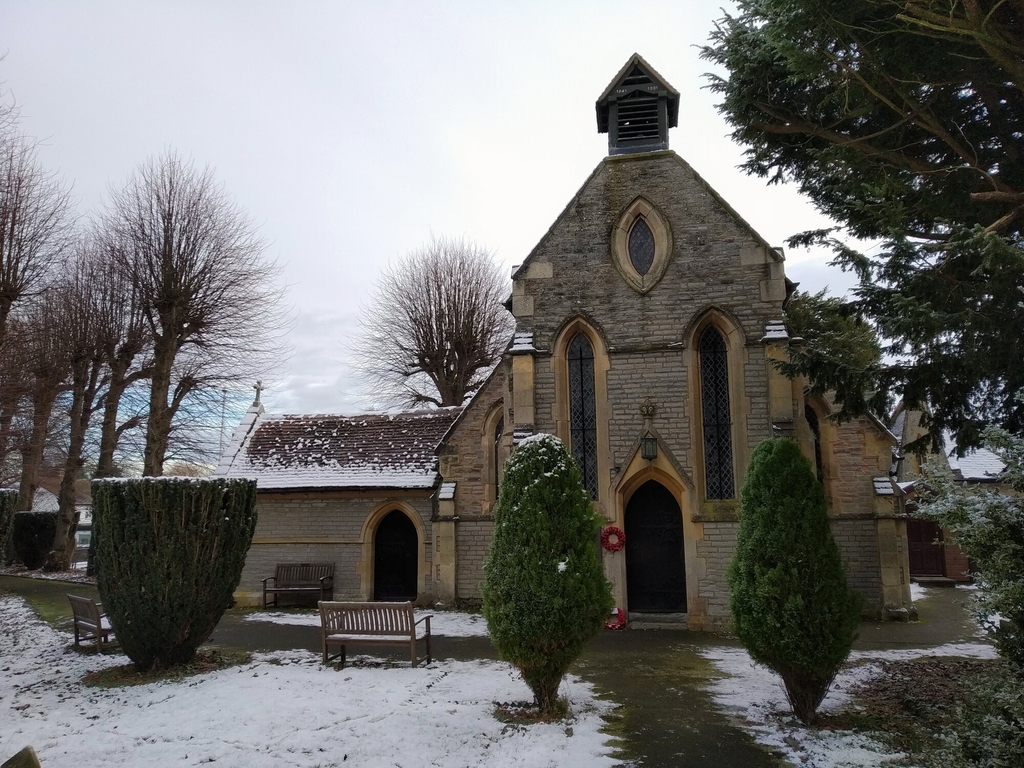
In early 1840 the Rev Francis Knottesford Fortescue, the Lord of the Manor of Alveston, and his son Edward, who had only just been ordained, chose Wilmcote for the erection of a ‘ Chapel of St Andrew’ to provide for the needs of the district, which was a few miles from the mother church of Aston Cantlow. Designed by the architect Harvey Eginton, the church was consecrated on St Martin’s Day, 11 November 1841 and Edward Fortescue became its first priest.
The church is a Grade 2 listed building, constructed of the locally-mined blue lias limestone for which Wilmcote has been celebrated for hundreds of years. Wilmcote’s historic quarries are just visible through the paths of old tramways to the Stratford upon Avon canal. The stone splits well into sheets and was used for paving as well as building, including for the floor of the Houses of Parliament when they were rebuilt in the 19th Century.
Soon after the church was built, Edward Fortescue added a school and a ‘quiet house’. The quiet house was one of the first retreats for Church of England priests. To this came Tractarian leaders including Archdeacon (later Cardinal) Manning. Village tradition has it that Cardinals Manning and Newman each planted a yew tree in the churchyard. The quiet house eventually became the original Vicarage.
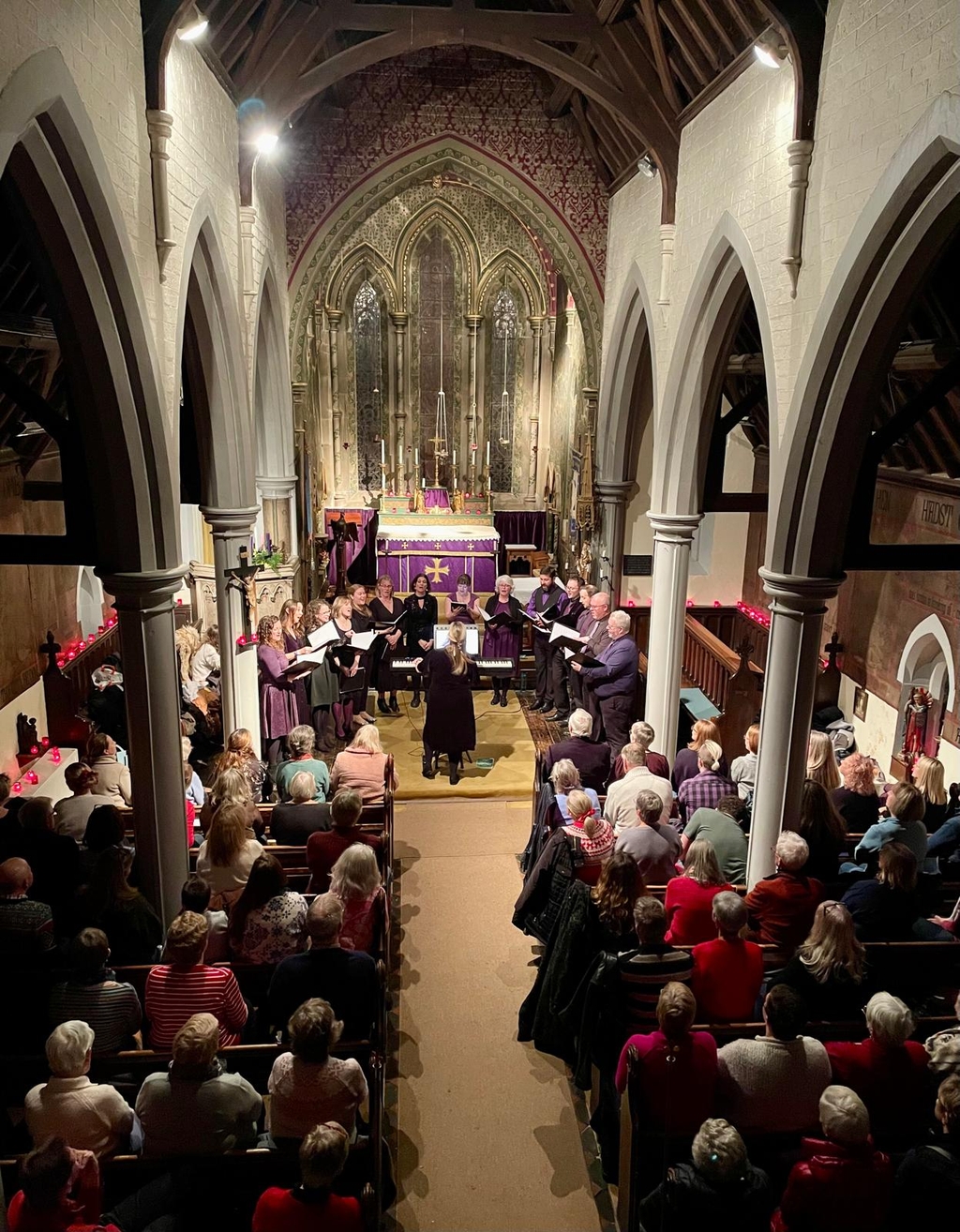
The church holds about 100 worshippers. In the early days of the church, men sat on the south side of the church, where racks or shelves still are to be found for men’s top hats under the book ledge. Women sat on the north side.
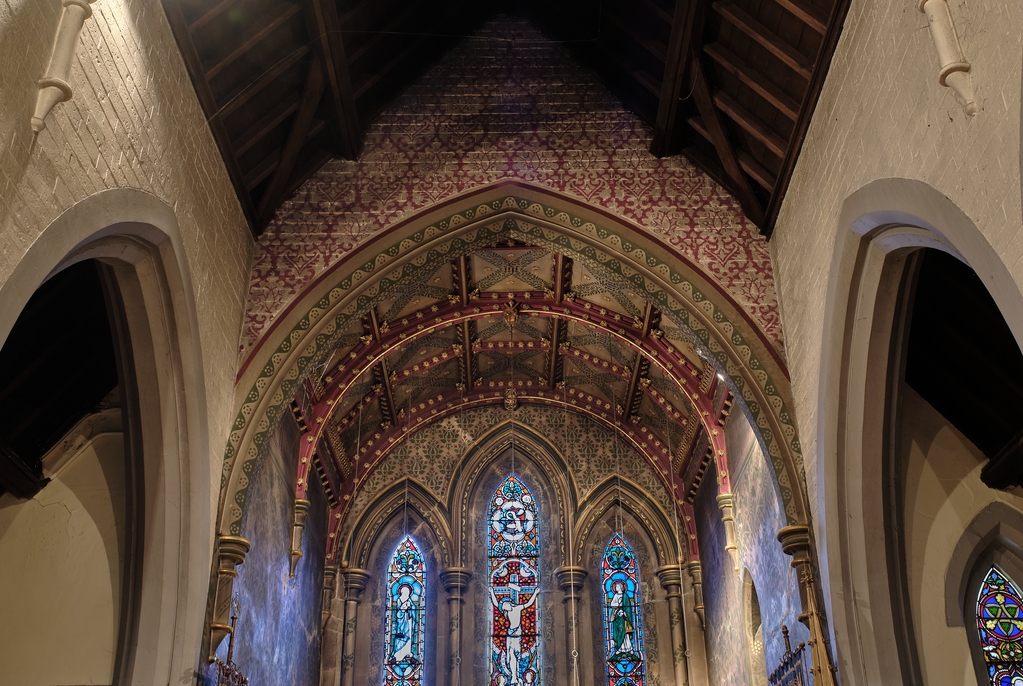
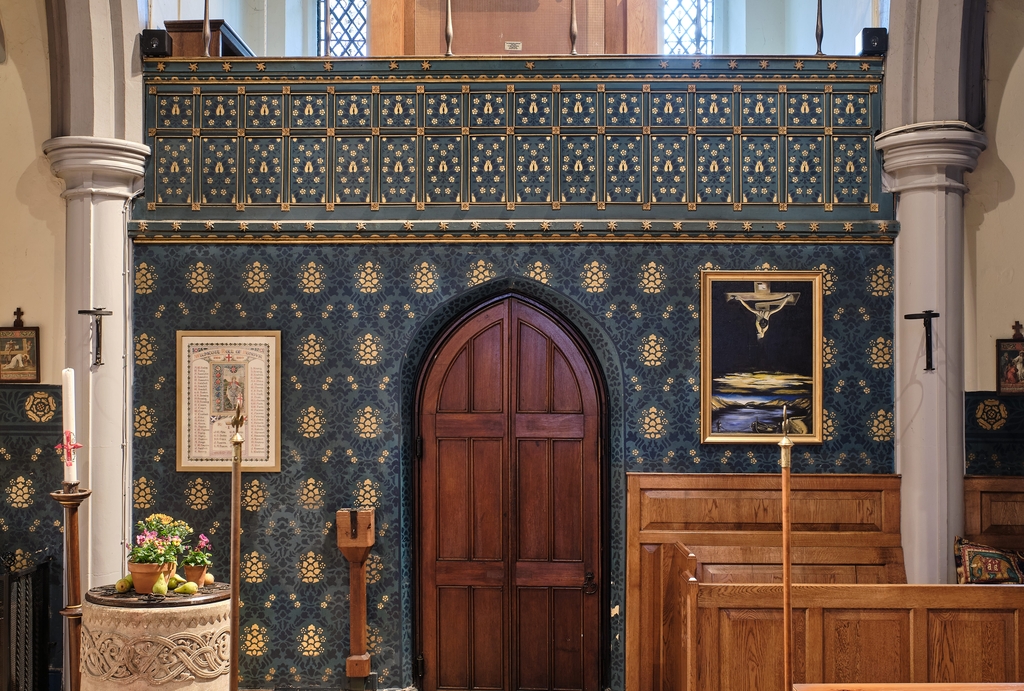
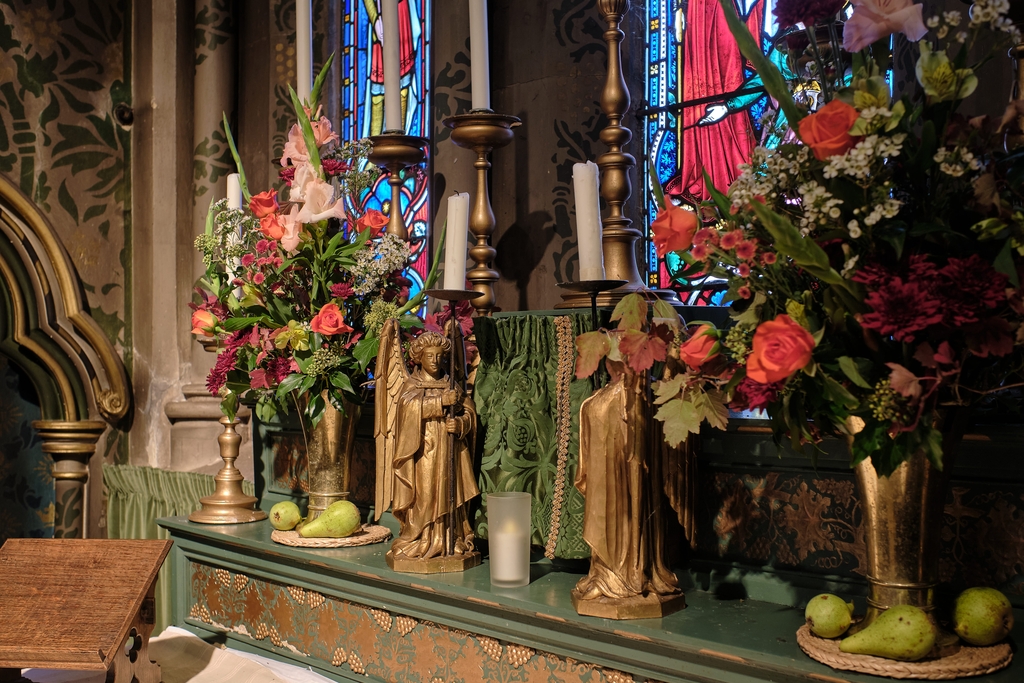
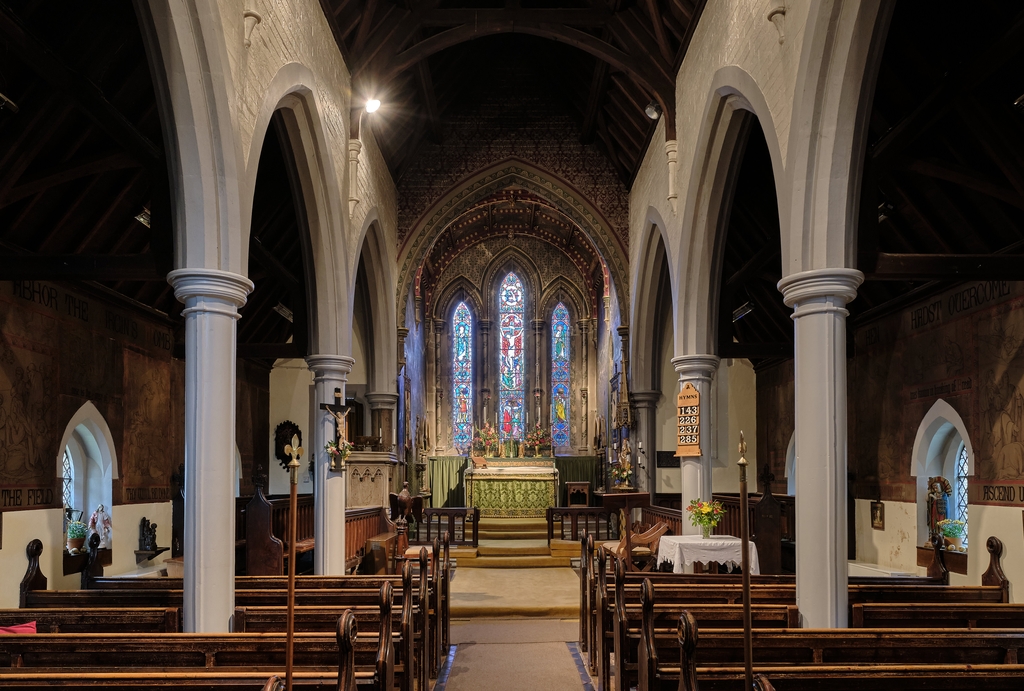
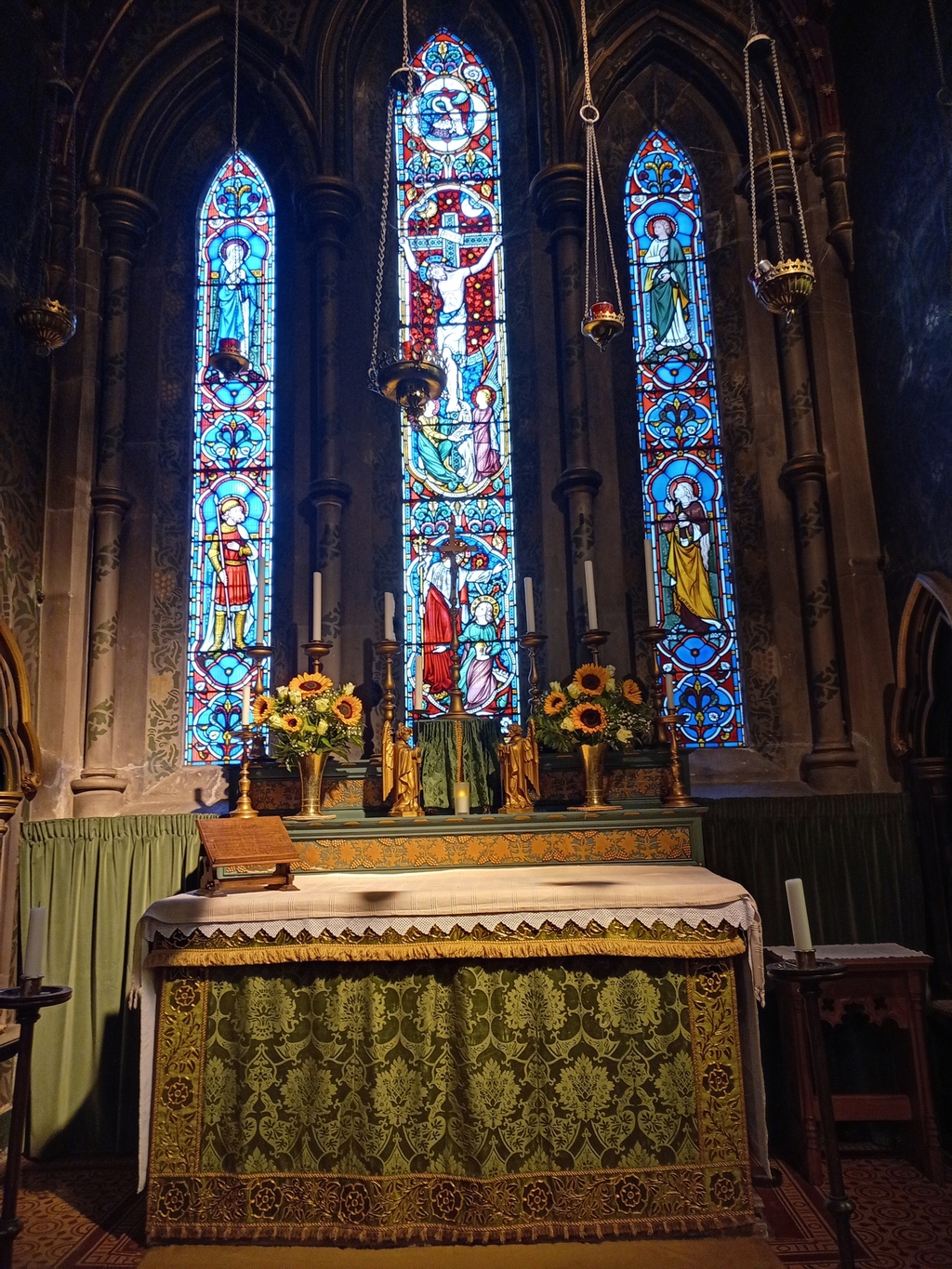
The church has a raised high altar, a chancel, a nave, fixed pews, a small upper vestry, a large lower vestry, a porch at the west end and an organ gallery above the porch. The high altar is made of local stone. The Sanctuary has Victorian and Tractarian influences.
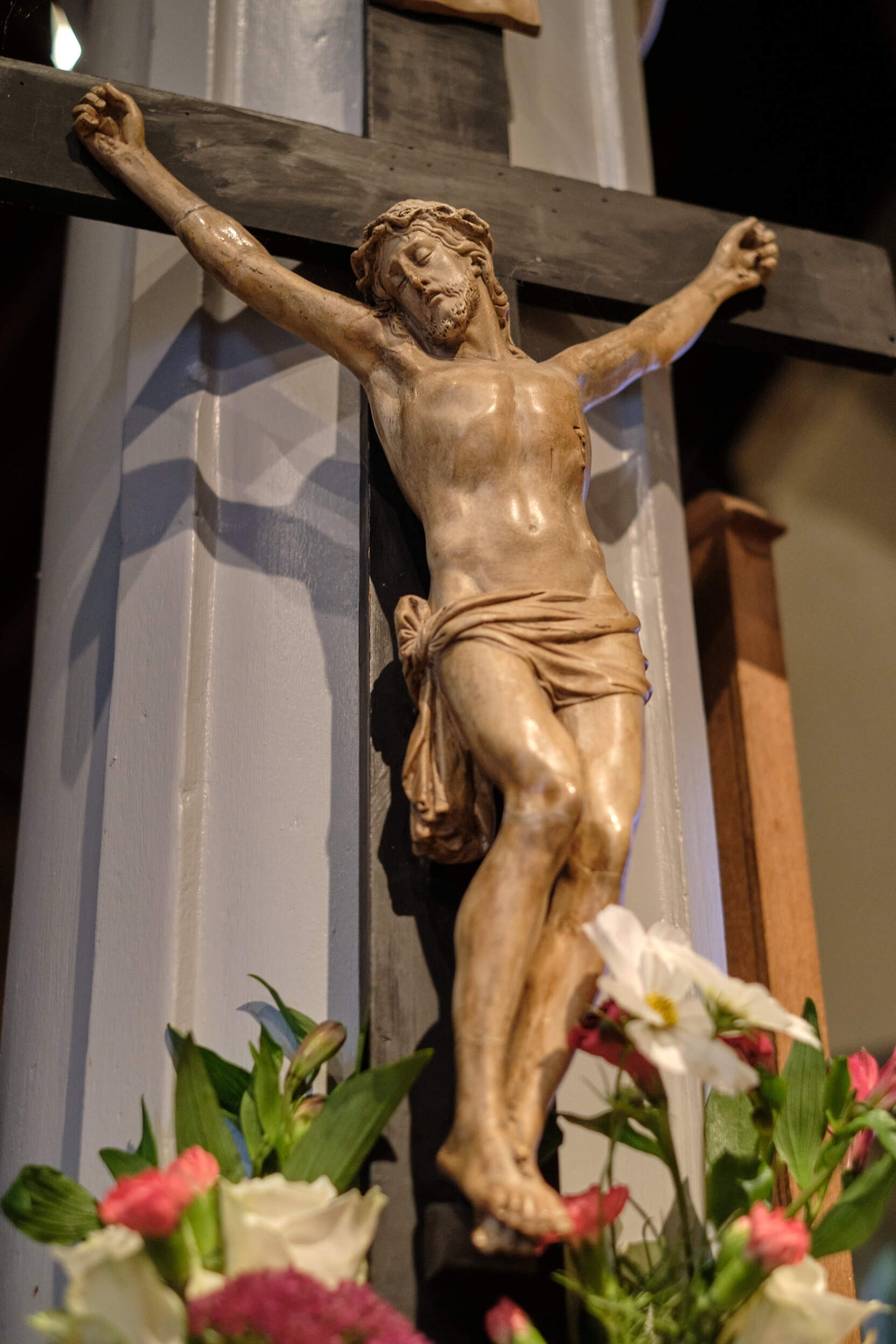
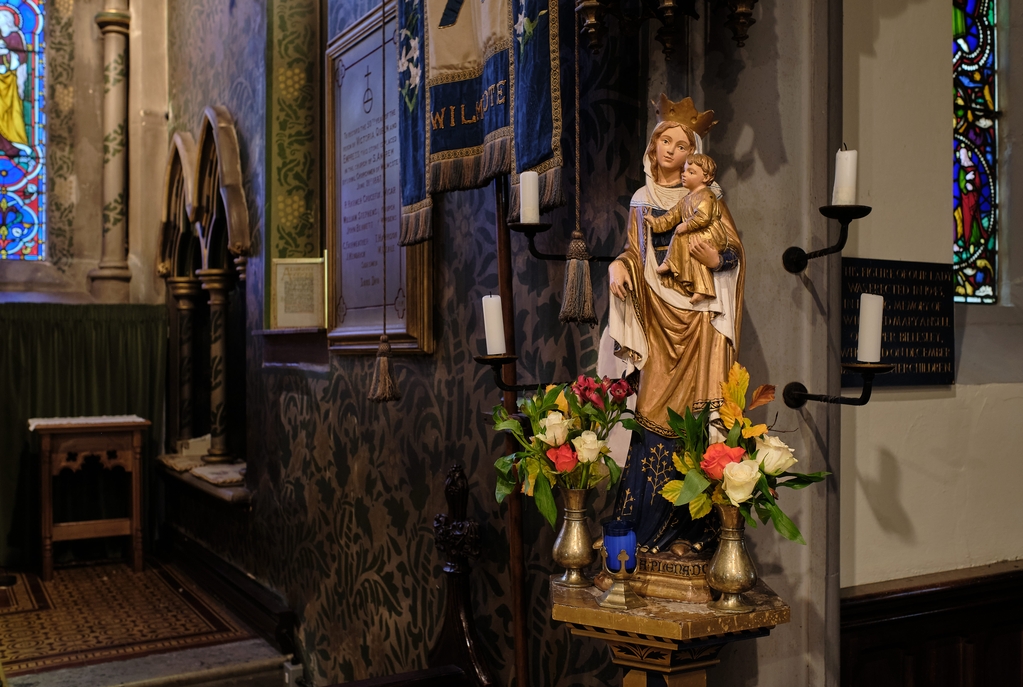
The church is highly decorated, with Biblical scenes and texts on zinc plate on the nave walls. There are pictures of the Stations of the Cross and statues of the Saints including Our Lady Crowned, St Andrew (the Patron Saint of the parish), St Christopher (the Patron Saint of children and travellers), St George, St Martin (on whose day the Church was consecrated) and St Francis of Assisi.
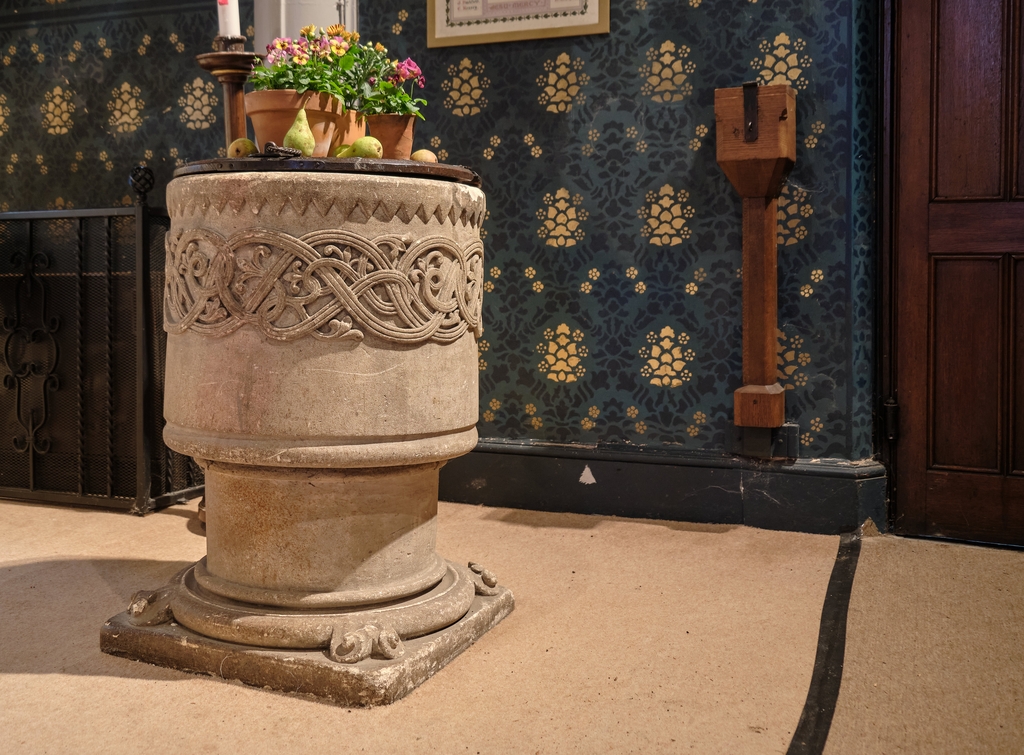
The church has beautiful vestments in all liturgical colours, including a French purple set of the 18th Century and also a festal Spanish set of the same period. There is also an old ‘Fiddle-back’ chasuble which tradition associates with Cardinal Newman. The font’s design may well derive from the oldest font in England, St Martin’s in Canterbury.
The processional cross is of great interest. The top is a fine pewter crucifix dug up in the 19th century from land where a local chapel stood in medieval times, and could be either 14th or 15th century. At the end of each arm of the cross is an emblem of one of the four Evangelists. The crucifix closely resembles one at the King Richard III Museum and Visitor Centre in Leicester.