
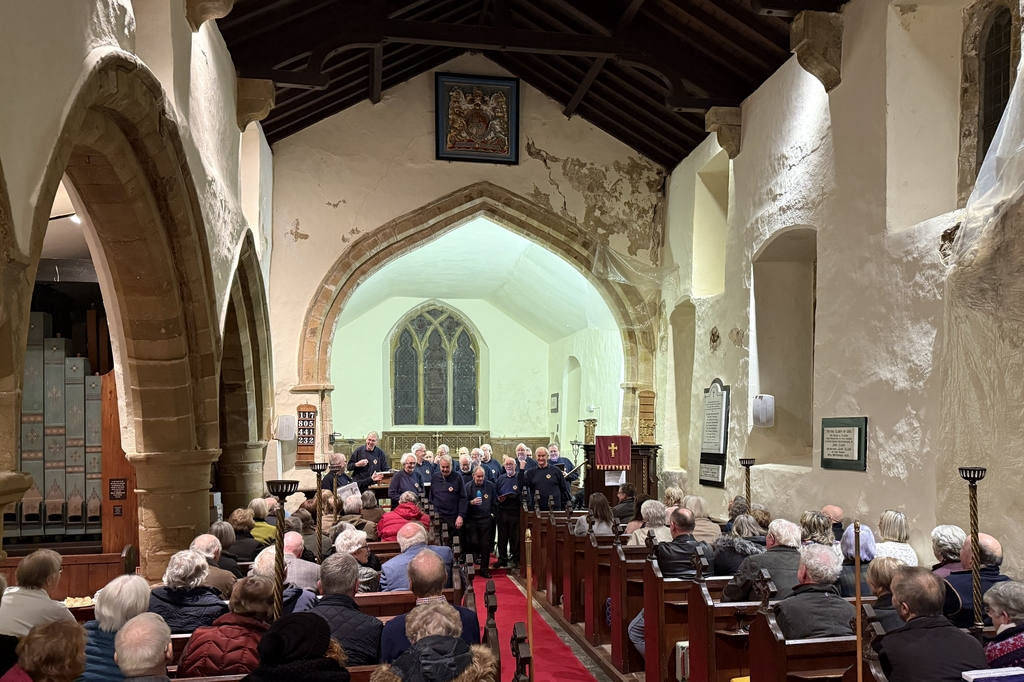
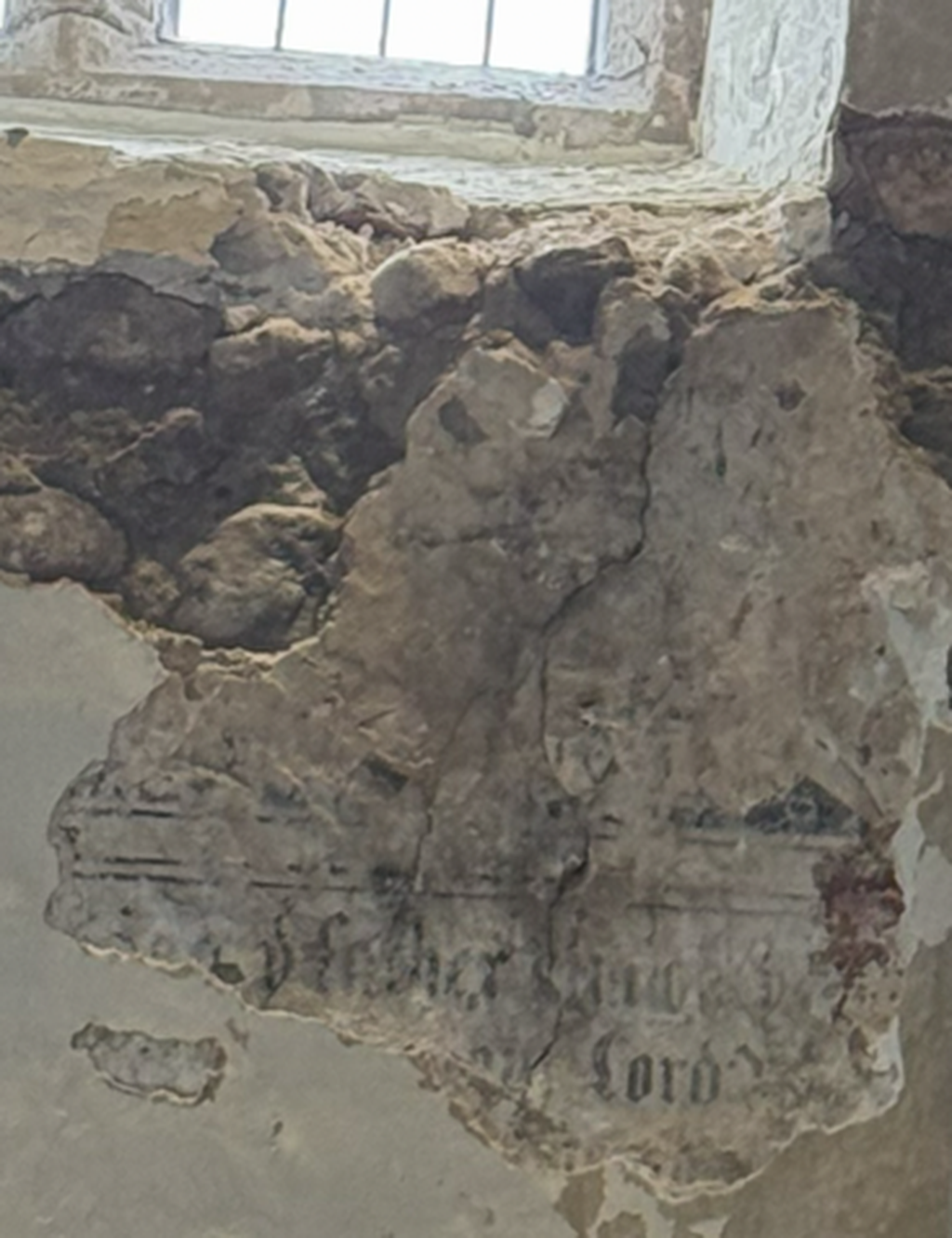
Redecoration to date has involved some plaster repair (using lime plaster) and repainting with limewash1.
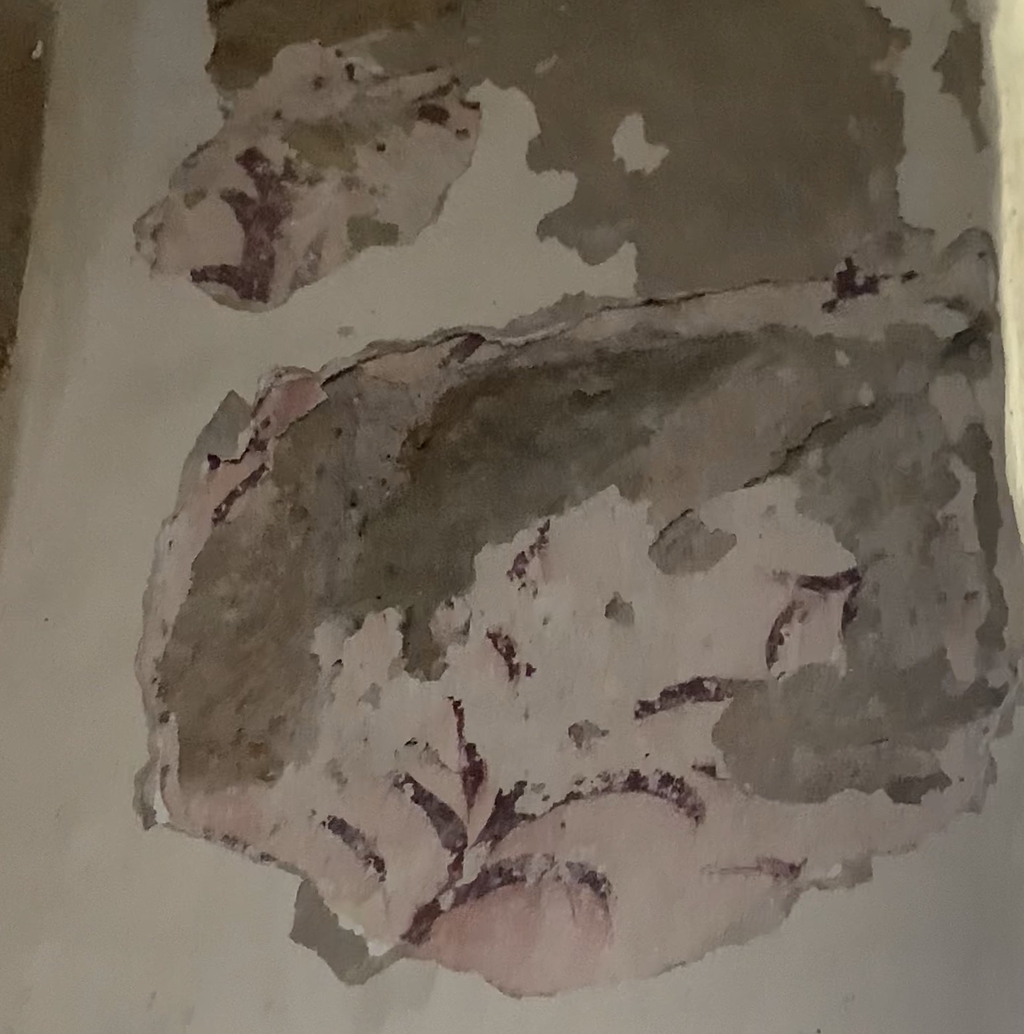
This report, describing the results from an in-situ assessment, was commissioned by Angela Aldridge (churchwarden). It was carried out by Peter MartindaleOne layer of early medieval painting has been identified so far, and traces of its presence have been found across the nave south wall. Findings at the eastern end of the south wall (next to the chancel arch) suggest that decoration extends into the reveal of adjacent window. It is likely that further traces / islands of paint remain under later layers of paint both on the south wall and into window reveals. This layer of medieval paint is likely to date from the C 14 when the church underwent extensive rebuilding, including raising the roof of the nave.
Black painted lettering from one post-Reformation text is clearly apparent, and it is possible that others may remain hidden under later layers of paint. Above the lettering there is a painted border, but that border would appear to comprise elements from two styles of border. One a simpler linear border, and other more embellished with bead and reel decoration.The condition of the revealed wall painting is fragile in a number of places. These revealed areas require conservation so as to preserve them for this and future generations. Flaking paint needs to be consolidated and areas of detached plaster secured.
Further detail is in the attached report