Beginnings in a Growing Community
In the years after the Second World War, Weymouth expanded rapidly. New housing estates were built in Lanehouse, and with them came the need for a local place of worship. Until then, residents travelled to Wyke Regis, Radipole, or Chickerell for services. By 1950, the Diocese recognised the need for a new parish centre, and plans were set in motion.From Canteen to Hut
At first, worship was held in a borrowed factory canteen in Lanehouse. Soon after, the Ministry of Defence provided an ex‑military hut, which was placed on the very site where the permanent church now stands. These humble beginnings carried the spirit of fellowship and determination, as the congregation gathered faithfully in makeshift surroundings.Fundraising and BuildingIn 1951, serious fundraising began. Parishioners and supporters were invited to “buy a brick,” sponsoring individual bricks to help raise the money needed. The architect chosen was Colin Crickmay R.I.B.A., of the respected firm Crickmay & Sons, whose lineage in church design stretched back to John Hicks of Dorchester and even Thomas Hardy.
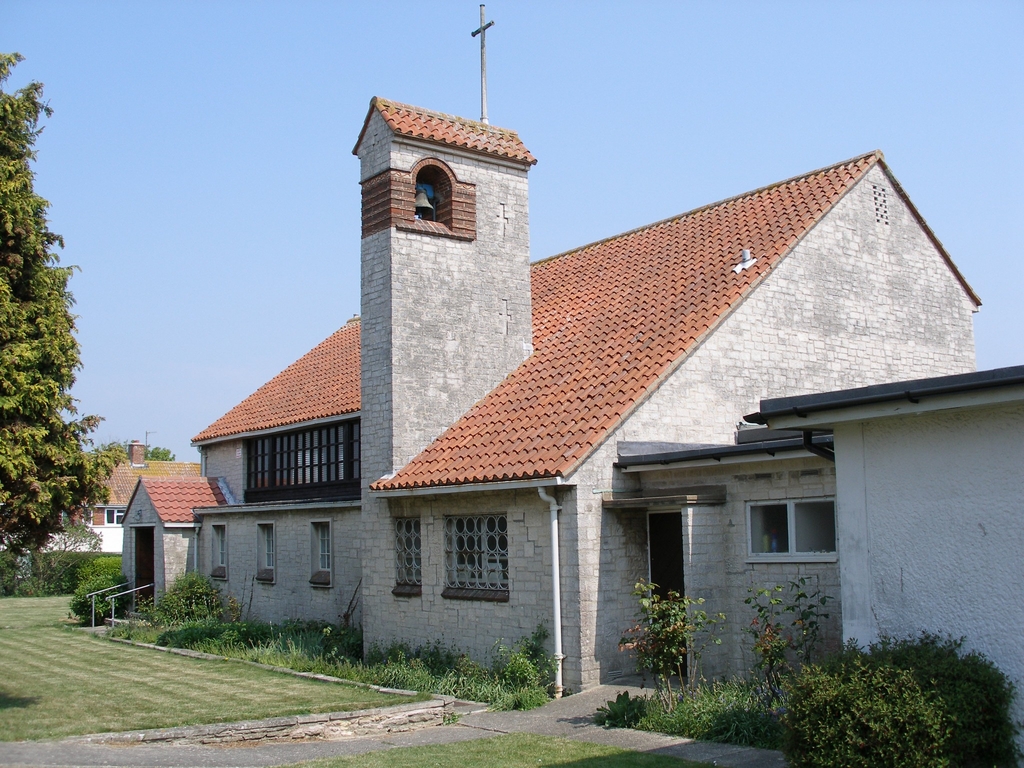
By 1952, the new church was completed and later consecrated, standing proudly on Lanehouse Rocks Road. Its design reflected the spirit of the age: simple, dignified, and practical, with clean lines and a welcoming interior. The gardens surrounding the church were lovingly tended, offering space for reflection and play.Parish status
St Edmund’s was originally envisioned as the centre of a new parish in its own right, carved from parts of Wyke Regis, Radipole, and Chickerell. For a time, it had its own incumbent and PCC, and was treated as a distinct parish unit. Over the years, however, as populations shifted and resources were reorganised, St Edmund’s was reconnected to Wyke Regis. Today, it forms part of the Parish of Wyke Regis, All Saints with St Edmund, sharing ministry and governance.The Saint Behind the Name
The church in Lanehouse Rocks Road is dedicated to St Edmund of Canterbury (Edmund Rich).- Early life: Born in Abingdon at the end of the 12th century, Edmund grew up in a deeply Christian home. Tradition tells that he once received a vision of the Christ‑child, calling him to a life of prayer and service.
- Scholarship: Educated first in Oxford, then in Paris, Edmund returned to Oxford as a respected teacher and leader of learning.
- Treasurer of Salisbury: In 1222 he became treasurer of Salisbury Cathedral, working under Bishop Richard Poore while the great cathedral was being built. He also served as vicar of Calne in Wiltshire.
- Archbishop of Canterbury: In 1233 Edmund was appointed Archbishop of Canterbury, the highest office in the English church. He was known for his integrity, his love of freedom, and his opposition to oppression.
- Final years: In 1240, Edmund left England for the Abbey of Pontigny in France, where he died on 16 November. Canonised in 1246, his shrine remains beneath the high altar at Pontigny.
Parish Life Through the Decades
- 1950s–60s: The church hall quickly became a hub for Sunday school, youth groups, and parish events.
- 1970s–90s: St Edmund’s grew into a centre of fellowship, hosting coffee mornings, fairs, and outreach programmes.
- 2000s–present: The church has embraced sustainability, installing solar panels and developing its grounds as part of its Eco Church journey. Today, it continues to welcome all who seek faith, friendship, and belonging.
St Edmund’s was built not only of bricks and mortar, but of vision, generosity, and prayer. From its earliest days in a canteen and hut, to its consecration in 1952, and through its years as both an independent parish and now part of Wyke Regis, it has stood as a beacon of community life in Lanehouse. Its story reminds us that churches are more than buildings; they are homes of faith, hospitality, and hope.