
Facilities and features
Accessibility
A Truly Inclusive Church
We are proud members of the Inclusive Church network. We believe in a Church that celebrates and affirms every person, regardless of ethnicity, gender, sexuality, disability, or economic background. You are welcome here exactly as you are.
Ample Parking: There is plenty of free parking located close to both the church and the church hall, ensuring easy access for all visitors
A permanent ramp provides easy access to the church for wheelchair users and those with buggies.
we have two wheelchairs available if required
How to Find Us by Bus
St Giles is easily accessible from Lincoln City Centre and the surrounding estates. The closest bus stops are located on Macaulay Drive and Outer Circle Drive.
From Lincoln Central Bus Station:
Stagecoach Service 5 (St Giles Estate): This is the most frequent service. Alight at the Coleridge Gardens stop on Macaulay Drive. From there, it is just a 2-minute walk to the church and Jubilee Halls.
Stagecoach Service 18: Another great option from the Bus Station. Alight at the Coleridge Gardens or Cowper Drive stop.
From Ermine or Nettleham Fields:
Stagecoach Service 17: Connects St John’s Ermine and Nettleham Fields to St Giles. Alight at the Cowper Drive stop.
From Nettleham Village:
PC Coaches Service 44: Alight at the Outer Circle Drive stop (near Geneva Avenue) for a short walk to the church.
You can use the Stagecoach Bus App or the Lincoln Bus website to track your bus in real-time!
Available in the Jubilee Halls
We have a loop system installed in the church for those who use hearing aids.
Ample Parking: There is plenty of free parking located close to both the church and the church hall, ensuring easy access for all visitors
News sheets and song books available in large print
Available in the Jubilee Halls
Our Building
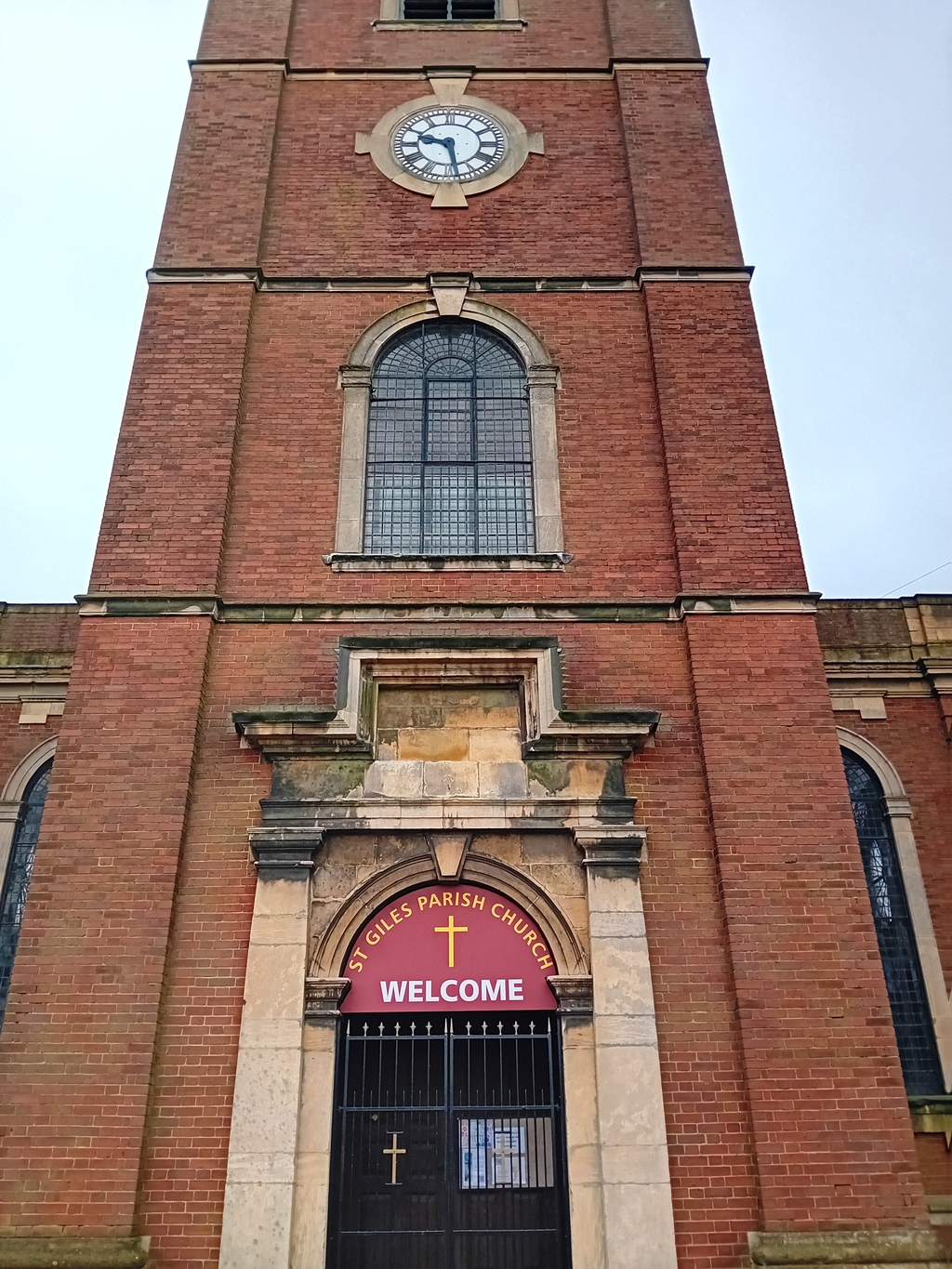
St Giles' Church in Lincoln is a Grade II listed building.
It was officially added to the National Heritage List for England on October 8, 1953. Being Grade II listed means it is recognized as a building of "special interest," warranting every effort to preserve its architectural and historic character.
Why is it listed?
The listing isn't just because it's a church, but because of its unique architectural pedigree:
• The "Church that Moved": As we discussed, it was built in 1936 using materials and the floor plan of the 18th-century St Peter at Arches church, which was demolished to make way for city centre development.
• Architectural Style: It is a rare 20th-century example of the Classical style (rather than the more common Gothic style seen in many churches), featuring red brick with beautiful stone dressings and a copper roof.
• Historic Interior: The listing specifically mentions the survival of 18th-century features brought from the original site, including the alabaster font, the wrought-iron altar rail, and, of course, that historic organ.
Our beautiful Grade II listed building is a unique piece of Lincoln's heritage, blending 18th-century craftsmanship with 1930s architecture.
Every Monday 2pm till 4pm
The stained glass at St Giles’ Church in Lincoln is a beautiful mix of historic craftsmanship and community storytelling. Because the church was "moved" and rebuilt in 1936, the windows reflect different eras of Lincoln's history.
The Stained Glass Windows
The windows at St Giles' tell a story that spans over 150 years, featuring both traditional Victorian artistry and celebrated modern designs.
• The Centenary Window (1998): This four-light window is the church's most famous modern feature. Designed by local artist and congregation member Jennifer Bell, it was given by the people of the parish to mark 100 years since the original nave and chancel were built.
o The Design: It features a vibrant waterfall motif, symbolizing God's Spirit flowing from the "Holy Mountain."
o Hidden Scripture: If you look closely at the painted grass and trees, you will find verses from Psalms 23, 24, 42, and 121 woven into the artwork.
o Parish Symbols: The window also includes symbols representing St Giles' and its three "daughter" churches: St Luke’s, St Paul’s, and All Hallows.
• The Diocesan Window: Located in the North Aisle, this window features the Arms of the Diocese of Lincoln, symbolizing the church’s deep roots in the local cathedral community.
• Victorian Heritage: The chancel houses two mid-19th-century windows that were carefully preserved and reset when the church was "moved" in 1936. They provide a rich, traditional contrast to the lighter modern glass.
• North Aisle Gems: You will also find late 19th-century windows in the North Aisle, including one depicting Jesus on the Cross, where his head is traditionally bowed to the right.
One toilet in church and separate toilets, including one all access, in the Jubilee Halls
Music and Worship
If the organ is the heart of St Giles’ Church, the bells are its voice. Their story is just as dramatic as the building’s, featuring a daring rescue by a teenager and a link to one of England’s most famous poets.
The Great Rescue
Just like the organ, the bells are "travellers." They originally belonged to St Peter at Arches in the city centre. When that church was facing demolition in the 1930s, the bells were nearly separated or sold off.
• A Youthful Campaign: A 19-year-old local named Jack Chambers launched a campaign to save the bells as a complete set.
• Success: His effort worked. The full "ring" was moved "uphill" to the new St Giles' and dedicated on Whit Sunday, June 5, 1938.
• A Family Affair: Jack and his two brothers, Sidney and Neville, became the first ringers to sound the bells in their new home.
Bell Specifications
The tower houses a ring of eight bells, which are highly regarded by the Lincoln Diocesan Guild of Church Bell Ringers.
• The Founder: Most of the bells were cast by the famous Abraham Rudhall II of Gloucester in 1728.
• The "Tenor" (The Big One): The largest bell (the tenor) weighs approximately 18 cwt (about 900kg) and is tuned to the key of F.
• Sound Quality: Because the tower at St Giles' is built of brick rather than solid stone, bell ringers often note that the bells have a unique, "mellow" acoustic compared to other city towers.
The Poet’s Tribute
The bells of St Giles' were immortalized in 1945 by the Poet Laureate Sir John Betjeman in his poem "Before the Anaesthetic." He wrote:
"St. Giles’s bells, they richly ring"
"You ancient, rich St. Giles’s bells"
Betjeman was captivated by the "intolerably sad, profound" sound of the bells ringing across the Lincoln skyline, cementng their place in English literary history.
Can you hear them?
The bells are still very much active today:
• Practice Night: Usually Monday evenings (7:30 PM – 9:00 PM).
• Sunday Service: You’ll hear them ringing out before the 10:00 AM service.
• Historic Board: Inside the ringing chamber, you can see Lincolnshire’s oldest peal board, dating back to 1756, which was also moved from the original church.
St Giles' Church in Lincoln houses a truly remarkable instrument with a unique history that matches the church’s own nickname, "the church that moved."
The organ is widely celebrated by enthusiasts for its historic pipework and its connection to some of the most famous names in British organ building.
A Historic "Traveler"
The organ's story begins long before the current St Giles' Church was built in 1936.
• Original Home: The core of the instrument came from the St Peter at Arches Church in Lincoln's city centre. When that church was demolished in 1930, the organ was dismantled and moved "uphill" to the new St Giles' parish.
• The 1795 Foundation: Much of the case and pipework survives from an original instrument built by H.C. Lincoln in 1795.
• Father Willis Connection: In the 19th century, the organ was enlarged by the legendary "Father" Henry Willis, who is world-renowned for building the organ in the Royal Albert Hall and Lincoln Cathedral.
Modern Restoration
The organ remains in excellent working condition today thanks to dedicated maintenance:
• Cousans of Lincoln: The local firm Cousans performed significant work on the instrument, adding a responsive tubular-pneumatic action and a beautiful mahogany console.
• Recent Cleaning (2024): As recently as July 2024, the "Great" organ was cleaned and its complex pneumatic layers were releathered, ensuring the sound remains bright and clear.
Experiencing the Organ
If you want to hear this "beast" of an instrument in person, the church is a regular venue for high-quality music:
• Recitals: The church frequently hosts organ recitals, often on Mondays or special feast days.
• Renowned Performances: Celebrated organists like Colin Walsh (formerly of Lincoln Cathedral) have performed and recorded live albums using the St Giles' organ.
It is your lucky day! There are several organ recitals scheduled at St Giles' Church in Lincoln throughout 2026. These events are a fantastic way to hear the historic "Father" Willis pipework in action.
2026 Organ Recital Schedule
Most recitals take place on Mondays at 11:15 AM, with refreshments (coffee and cake) served from 10:30 AM. Entry is typically free, with a retiring collection to support the music program.
Date Time Performer(s) Notes
Monday, 6 April 11:15 AM Iain Harvey-Ashenhurst & Justyna Posluszna Easter Monday Special; both organs in use.
Monday, 4 May 11:15 AM Jeffrey Makinson Assistant Director of Music at Lincoln Cathedral.
Monday, 25 May 11:15 AM Iain Harvey-Ashenhurst & Justyna Posluszna Bank Holiday recital.
Why These Recitals Are Special
• The "Both Organs" Experience: On certain dates like Easter Monday, you can hear both the Grand Organ and the Chancel Organ in use, which is a rare treat for acoustics.
• Local Legends: You’ll often find top-tier talent like Jeffrey Makinson from the Cathedral making the short trip "uphill" to play this specific instrument because of its unique tonal quality.
• Restoration Milestone: 2026 is a significant year for the church's music, as it marks the expected completion of major restoration work on their instruments.
BCP Holy Communion is celebrated at 10am every Sunday and Thursday at 10am
Groups, Courses and Activities
Help for Visitors
WiFi avaiable in both the church and the hall
All dogs are welcome
Inside the church.
Other Features
See separate Jubilee Halls page
St Giles’ Church in Lincoln is actively involved in the Eco Church scheme, an initiative by the Christian charity A Rocha UK that helps churches care for the environment.
Eco Church Status
The Diocese of Lincoln recently celebrated a major milestone in September 2024 by receiving a national Bronze Eco Diocese award. As part of this wider effort, St Giles’ has been specifically recognized for its local environmental work.
• Community Garden: St Giles' has teamed up with the Diocese to support a community garden on the church grounds. This project is a key part of their "Land and Nature" commitment, providing a space for local children and residents to engage with nature.
• A Rocha Journey: While several churches named "St Giles" in the UK have reached silver or gold status (such as those in Desborough or Risby), St Giles' Lincoln is currently integrated into the Diocese's push for all parishes to reach at least Bronze status by 2026.
• Focus Areas: To maintain and improve its status, the church focuses on five key areas:
o Worship and Teaching: Including environmental themes in services.
o Buildings and Energy: Finding ways to make the historic Grade II listed building more energy efficient.
o Land Management: Using the churchyard for biodiversity and community gardening.
o Community Engagement: Working with local partners on sustainability.
o Lifestyle: Encouraging the congregation to adopt eco-friendly habits.
Caring for God's Creation
We are an active Eco Church, committed to protecting the environment and promoting sustainability. From our community garden—where local children help us grow and learn—to our efforts to reduce our carbon footprint, we believe that caring for the planet is a vital part of our faith. We are proud to support the Diocese of Lincoln’s journey as a Bronze Eco Diocese.