


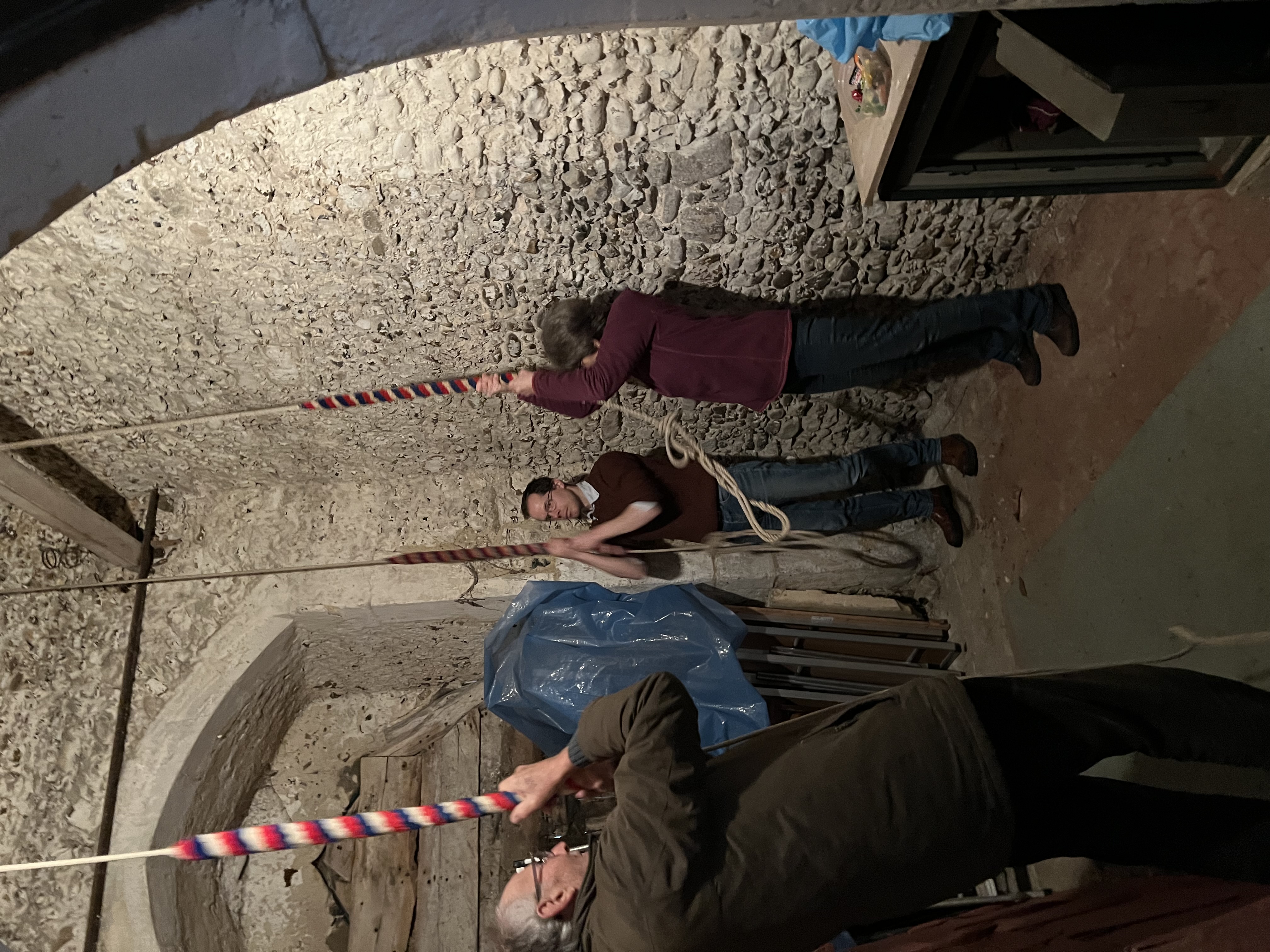
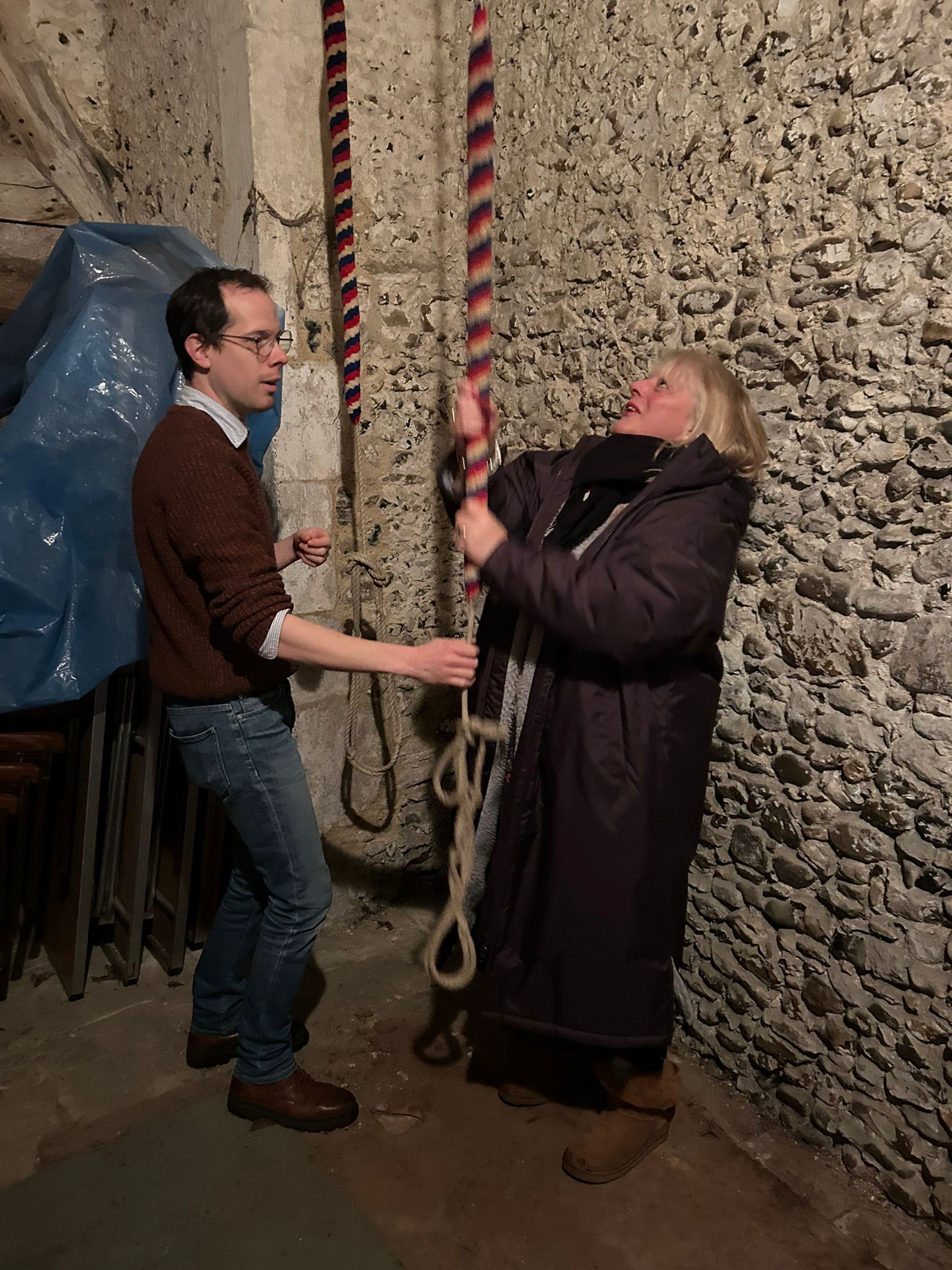
The 23rd of January 2026 was a joyous day for St Bartholomew's when our three bells were chimed together for the first time in many years. And what awonderful sound they made echoing through the village onr that day. Several villagers came to witness and enjoy those lovely chimes.
Historically, bells were used to summon the faithful such as monks and worshippers to Mass or daily prayers, but they also have a symbolic presence being the 'voice' ofthe church reminding the community of Gods unfailing presence.
In 2003 the flower festival was all about bells and a lady called Di Barker authored an impressive article providing the community with interesting facts about the church bells. The article explains that the earliest tenor bell (C-B) is medieval thought to be cast around 1300- 1350. It has no inscription, so its original maker remainsa mystery so far.
A renowned East Anglian family of bell founders cast the second bell: Braysers of Norwich in approximately 1480. It is decorated with three shields on its shoulder, three bells and a crown sprigged.
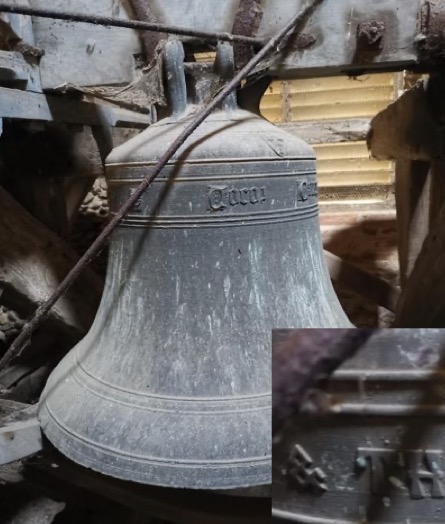
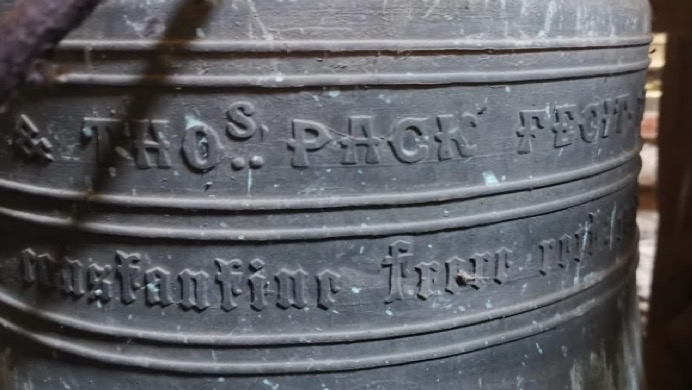
In 1553 it is recorded that there were three bells hanging in the tower, but the present-day treble bell must have been replaced because it bears the inscription Thomas Lester &Tho5. Pack Fecit 1754. Lester & Pack worked for and owned the bell foundry in Whitechapel London at this time in history.
The bell was then recast as a note in the minutes of the Church Vestry meeting at Easter 1908 records that £5 was to be sent to the architect for his services on the tower and bells which had been restored in memory of Cannon Constantine Frere, Rector of Finningham 1847-1905. On or near the treble isa medallion bearing the initials J.W.& S., dated 1907, anda plaque: "Day hung us". The foundry, John Warner & Sons, cast bells in London from 1788-1924 and Days of Eye undertook the task of rehanging the refurbished bells with new fittings but on the old frame.
Today there are stillthree beautiful bells hanging in the 14th century church tower at St Bartholomew's which are reached through a set of steep ladder type stairs, certainly not a climb for the faint hearted. This means they remain unseen by most people bara few brave bell ringers.
Things changed when we applied for a grant from the Adrian Knights fund to augment our bells and we started to delve into the history of our lofty bells wondering what they looked like and how they sounded when chimed. Our Church warden always chimed one bell for the call to service on a Sunday, but we had no idea how they would sound together.
So, with the kind assistance of Neal Dodge, the Public Relations Officer for the Suffolk Guild of Ringers, who climbed into the upper tower he was able to take photographs whilst TADPA Faanfinr iNEW ascertaining that the bells were safe to be chimed. These photographs will be made available in the church to view.
The bell tower had accumulated a large number of items so we were filled with gratitude for our kind village community members who assisted in clearing the tower so that our bell ringers from the surrounding areas could chime our bells for our Sunday services in a safer environment.
These three bells have seen some action over the years with refurbishments and ringing out through the village for special occasions such as the Millenium so we really hope and pray that our historic bells will be augmented and will continue to resonate and call worshippers to the services, mark significant Christian, National and personal occasions for years to come as we look to future proofing our bells for future generations to delight in.
For the bells are the voice of the church; They have tones that touch and search the hearts of young and old. The Bells of San Blas 1882- Henry Wadsworth Longfellow
Prayer pulls the rope below and the great bell rings above in the ears of God - Charles Spurgeon