
About Us
COPGROVE CHURCH HISTORY
ST MICHAEL AND ALL ANGELS
The earliest record of a Church at Copgrove is in the Domesday Book, which was compiled at the command of William the Conqueror, between 1080 and1086
There can however, hardly be any doubt that everyone in Copgrove was a Christian, as long ago as 660AD
The semi -circular chancel arch, with its plain chevron carving, is Norman, and probably dates from around 1100AD.
Before 1216AD Copgrove had been given to the order of Knights in Christendom, and their Grand Priors in England became patrons of the rectory until 1535AD.
Probably the only link we have with them, is the dedication of the Church of St Michael, the warrior -archangel, who was a favourite patron of theirs.
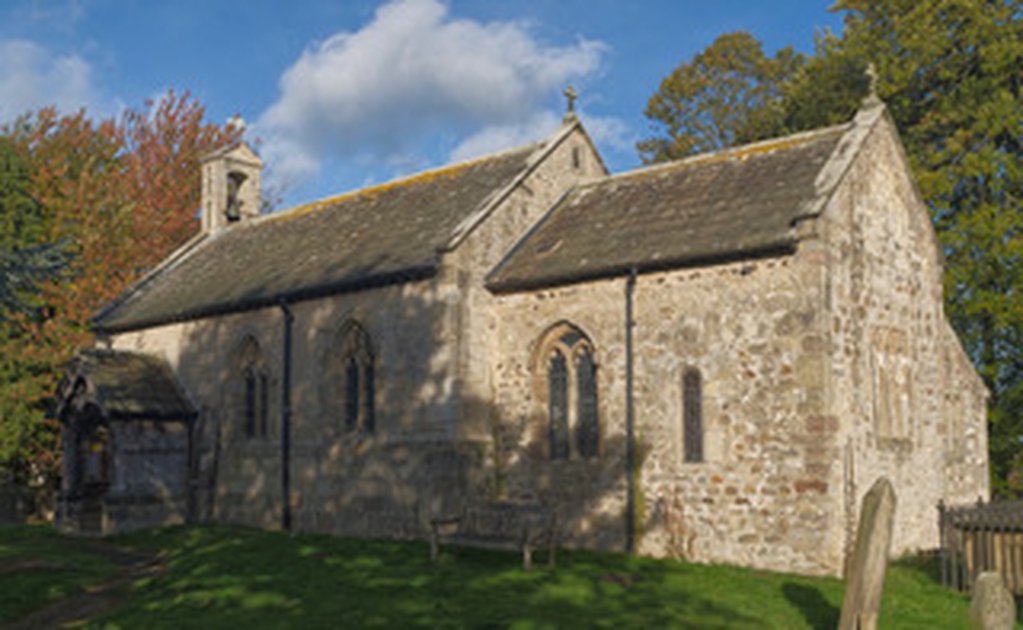
The Church we worship in today, is the result of major restoration work, tastefully and expertly carried out, at the end of the 19th Century.
In 1889 the 14th century east window and the lancet window in the Sacrarium were restored and in 1897 a new roof, oak pews and choir stalls and a pulpit and reading desk were installed. The old wooden box pews were used to make the present panelling on the walls of the knave.
The floor was lowered by 13 inches and re-laid on concreter when the pre-Reformation altar stone was found buried in the chancel, where it had probably been concealed to escape desecration. It was restored to its proper position, mounted on an oak plinth.
At the same time the vestry and entrance porch were added, all the windows in the nave were rebuilt, with much new stone tracery, the interior walls were plastered and the font was given a new bowl, shaft and steps-of the Norman original, only the base remains.
Most of the cost of this work was defrayed by Dame Emily Charlotte Bridgeman and members of her family. Admiral Sir Francis Bridgeman gave the organ.
In the original seating arrangements, the Squire’s pew occupied almost all of the South wall of the nave, facing in wards, across the aisle and opposite, on the North wall, were pews for the Rector’s family and for the Parish Clerk. An 18th Century holder of this office is said to have cut away part of the decorated impost of the Norman chancel arch, to avoid striking his head, on coming to his feet beneath it. It must be remembered that the floor was then more than 12inches above the present level. The lost stone was replaced with plain modern work, during the work of restoration.
After the Reformation, it became customary to display the Royal Arms in church, to remind the congregation that the Sovereign had replaced the Pope as the head of the English Church, and this display was made compulsory at the Restoration of the Monarchy in 1660.The Copgrove Royal Arms are especially interesting, for they consist of one coat painted over another. Firstly, there is the Arms of Charles 2, this Arms having CR painted above it. After Queen Anne came to the throne her initials AR were painted over King Charles initials. The mottos were also changed. Both sets of initials can be read today.
There are traces of colour frescoes, dating from the Mediaeval times, round the East window and in the recess of the South wall, near the door.
When the Vestry was added in the 19th century a carved stone known as the Devil’s stone, of great antiquity, and almost certainly of Roman-British origin was moved from the North chancel wall and included in the North East corner of the new exterior wall. The stone has very recently been moved to the interior of the Church, above the reading desk to stop weather erosion. The work of restoration was completed by adding oak panelling to the chancel walls made from tress grown locally in the park of Copgrove Hall, felled and trimmed one hundred years earlier, in 1790.
This beautiful and peaceful little building remains the Parish Church of the tiny community of Copgrove, and for the worship for which it was built continue to be offered at regular monthly services.