






Never Alone
Most of us, I suspect, can relate to the feeling of relief and thanksgiving when somebody comes to help us. Whether we have broken down in our car, or the heating won’t work, or we hurt ourselves and call for an ambulance. Knowing that someone is coming to save us is profound.
Jesus said, ‘I will not leave you orphaned; I am coming to you.’ Remember where we are in the story. This is the night of Jesus’ betrayal. And what does Jesus say to his disciples, who by the end of the night were going to be scattered across Jerusalem and the surrounding area? On this night of confusion, fear, betrayal and mystery, he says, ‘I will not leave you orphaned; I am coming to you.’
We live in the extraordinary period between the resurrection and the culmination of the kingdom of God, the moment where potential becomes reality, where promise becomes, in John Donne’s word, ‘possession’. This means we have to try to be people who can live in the space in-between the promise and the possession. To be Easter people is to be people who can exist, who can do our living and working and breathing, our praying and hoping and loving, with something that is less than certainty, but is much more than a vague dream of something better to come.
Built into us is a desire to seek God, That’s partly what St Paul is trying to say to the people at the altar to an unknown God. Longing for relationship with God is natural. What Jesus says on the night before he dies is that it is not we who need to travel to God but God who, through the events that are about to unfold in Jerusalem, will come to us. ‘I will not leave you orphaned; I am coming to you.’
That promise, that ‘sure and certain hope’, as the funeral service puts it, helps us to make sense of this in- between place in which we live. This place where, though we profess that we ‘look for the resurrection of the dead and the life of the world to come’, nonetheless is a patchwork of glory and pain, of despair and hope, of deep troughs of depression as well as the occasional mountain-top experience. We all know how brittle life can feel. We all know how brittle life can be. We live our personal tragedies, alongside those of our communities, our nation and our world. How is this the life of the resurrection? How are we an Easter people with alleluia as our song?
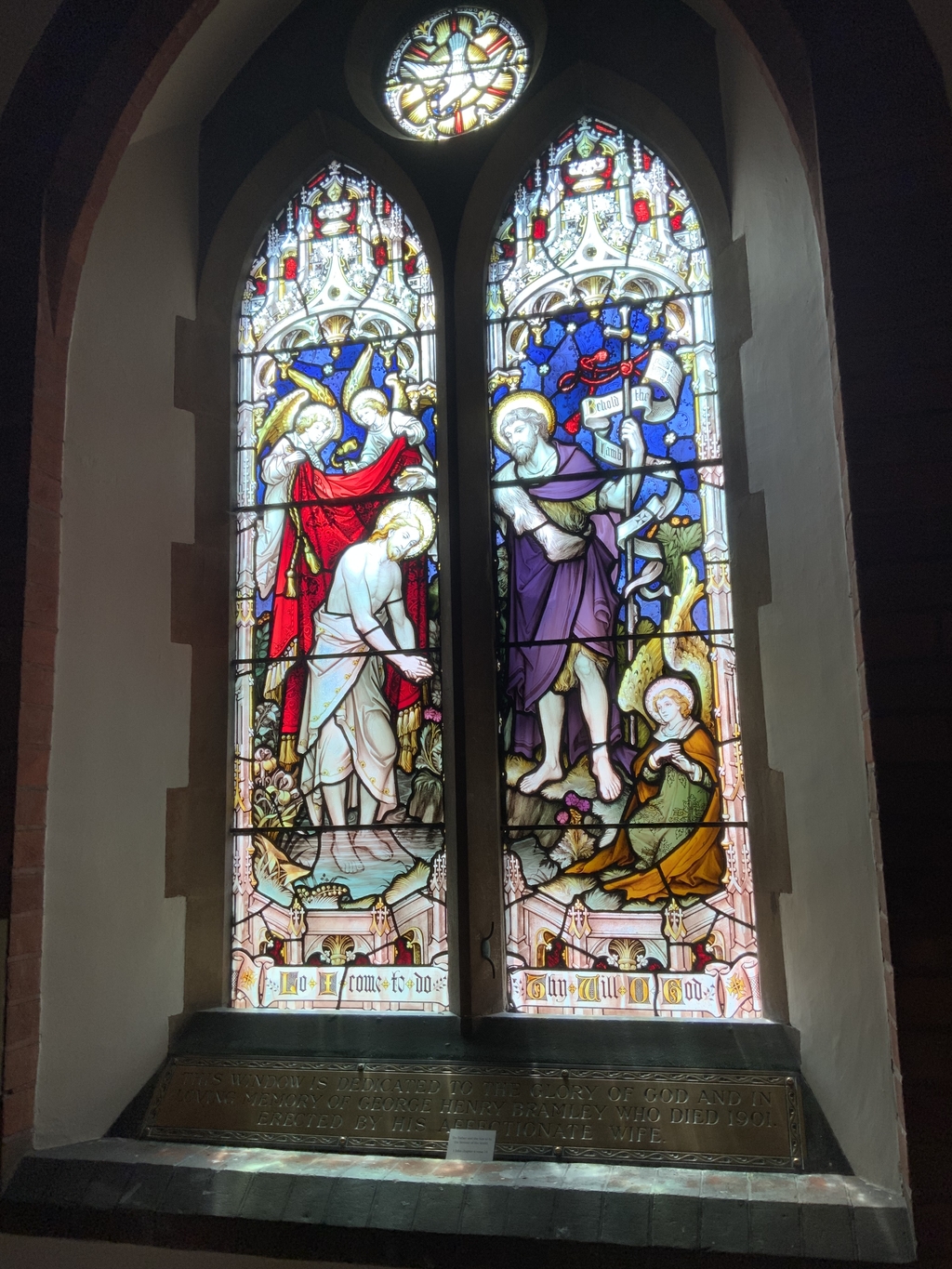
Well, as in almost everything to do within the Christian life, it comes back to the font. It comes back to the water of baptism. Jesus is not an impervious, waterproof Superman zooming in from somewhere else and whisking away everything awful and replacing it with a set of lovely things. The resurrection is about the person of Jesus Christ, fully human and fully divine, passing into the very depths, and rising, gathering up and transforming and transfiguring and hallowing all of that experience.
Jesus disappears into the waters of death and rises again, and we go with him. Breaking the surface of the font and emerging into the life of the resurrection where we still carry the marks of our sufferings, just as he does, the risen body of Christ bearing the marks of the nails and the spear, but now we know that those marks are hallowed, and so are ours.
None of this, of course, fully addresses the fairly arbitrary nature of suffering in this world. Why does one person get an incurable disease or get murdered on the streets, and some other person doesn’t? But the reason that we can live in this in-between world, this place where the tomb is empty, where Christ is coming to us, where the world is pregnant with the potential of the kingdom, is because the sort of God who dies and rises again for us is the sort of God who knows what it is like to be us, because Christ also suffered. And he is with us in our suffering too.
You are not alone. To be Easter people is not to be people who escape the realities of the world, it is not to be people who, by being part of God’s ‘crew’ get a free pass from the suffering and awfulness that life entails. But it is to be people who know that although we go down into the waters of death, we come back out again, and as our heads break the surface and our eyes see the glory of the kingdom of God, we do so accompanied by the Christ who is no longer an unknown God but is the parent of children - children who find that they are no longer orphaned because God has come to us.
Every blessing,
Christian