





Mary, the mother of Jesus, holds a special place in our Faith because of her role in the story of Jesus. At the Annunciation, Mary was chosen to be the mother of Jesus. The Gospels mention Mary's presence at key events in Jesus's life, including his birth, his presentation in the Temple, the coming of the Magi, the wedding at Cana, and at the cross during his crucifixion, where Jesus entrusted her to the care of the disciple John.
From these Gospel stories has been constructed a picture of Mary that fulfils the prediction ascribed to her in the Magnificat: “Surely, from now on all generations will call me blessed.” (Luke 1:48).
Down the centuries Mary has indeed been called Blessed, due to her role in establishing our Christian belief that the nature of Jesus comprises both God and Humanity.
Artists have portrayed Mary as a priestly figure, with her own autonomy and authority, where she embodies the symbolic vocation of all Christians to “give birth” to the transforming presence of Christ.
Thus far all Christians will be united in this understanding.
But, we have to be aware that some Christians take the Blessedness of Mary much further.
Catholic and Orthodox Christians venerate Mary, viewing her as an intercessor and spiritual mother. The basis for this development of belief can be found in an apocryphal Gospel of James from the second century, in which Mary’s perpetual virginity is affirmed. Then, in the fifth century the Second Council of Ephesus affirmed Mary’s title as the "God-bearer".
In those early days, Christians saw virginity as an ideal, an alternative to marriage and child bearing; a choice shared by both Jesus and the apostle St Paul. This extolling of virginity did have some advantages in those days. The option of becoming a celibate nun in community with other women gave young women in the early church an attractive alternative to marriage, in a culture where marriages were generally arranged and death in childbirth was common.
Sadly, down the centuries the figure of the Virgin Mary has been used to cut women off from full participation in the life of the Church. The character of women was distorted, turning them into submissive, dependent persons, taking second place to men. Arguably, the perpetual-married-virgin, deprives women of a role model not only of leadership and courage, but also of sexual desire and passion.
The price women have paid until very recently has been their exclusion from leadership in the Church. Even today some people still use the figure of the Virgin Mary to silence women and marginalise their experience in the Church.
Yet, in the Gospels Mary is a vibrant figure: strong-minded and courageous, a leader in the community of faith. She is the God-bearer, a normal wife and mother of children, confirming women in their humanity and supporting their efforts to challenge unjust structures, both within and outside the church.
In the words of the Magnificat, Mary proclaims a radical message of social justice, where the poor are exalted and the powerful overthrown. Mary initiates Jesus’ ministry at the wedding of Cana and follows him to the cross, despite the dangers. She is a vital presence at the birth of the church at Pentecost, sharing the divine vision of a world transformed.
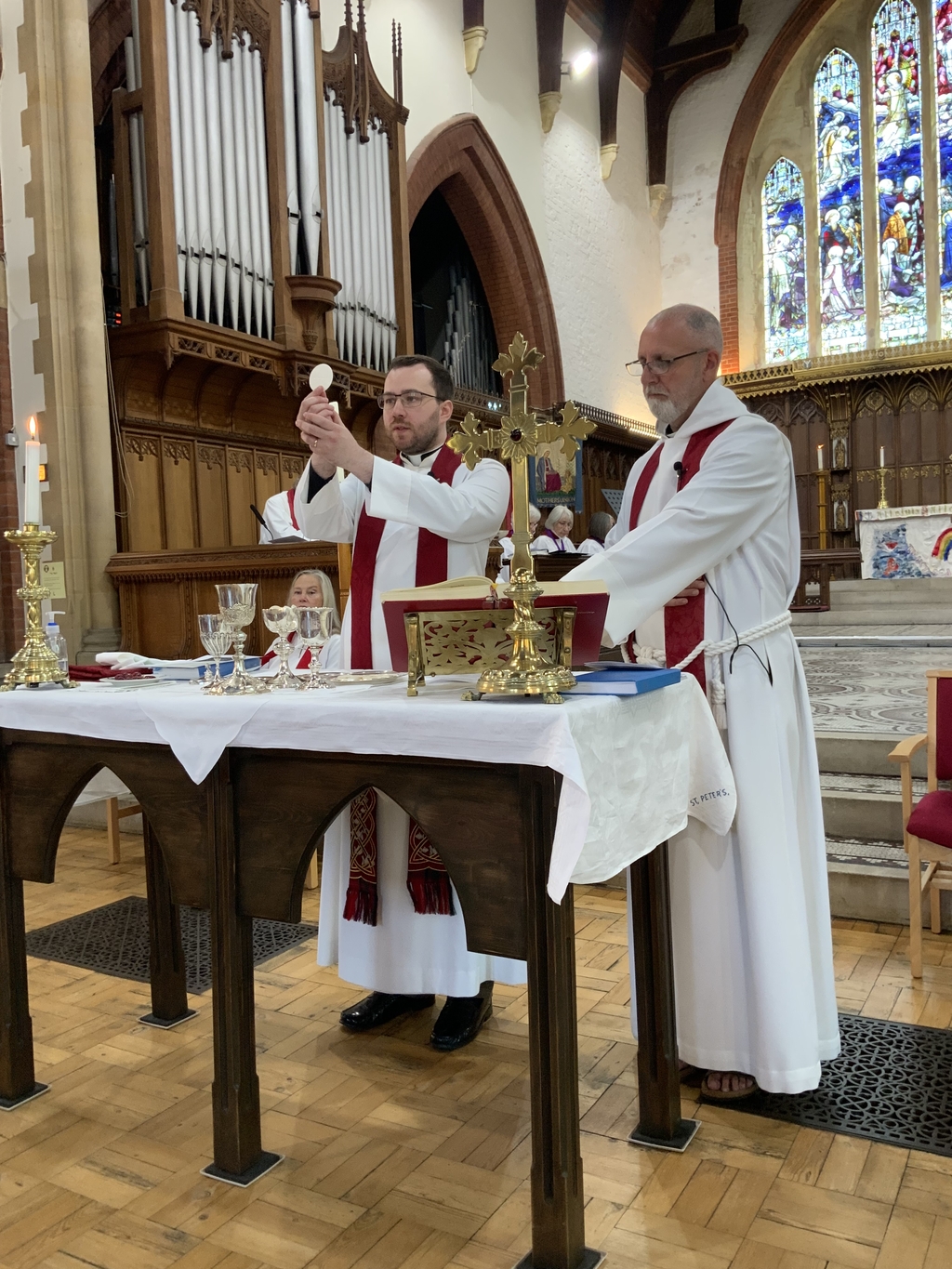
The world received the body of Christ from the Virgin Mary, and thankfully, today the Church of England no longer excludes women from giving the body of Christ, as priests, to the faithful at Holy Communion.
We in this worshipping community continue to fulfil Mary’s words spoken in the Magnificat: we call her The Blessed Virgin Mary.
The Revd Malcolm France