





Festival of Creation
Readings: Matthew 6: 25-34, Deuteronomy 8: 7-18, Revelation 22: 1-5
The Diocese of Norwich is promoting the Festival of Creation during September which is ecumenical and worldwide giving thanks for God’s creation, redemption and renewal. Make a joyful noise to the Lord, all the earth. Worship the Lord with gladness; come into his presence with singing.
Abundance is the theme for this Sunday and goes hand in hand with multiplication as we see throughout the Gospels. Examples are shown in the multiplication of loaves and fishes, abundant best wine at the wedding in Canna, Mary lavishly anointing Jesus feet with expensive perfume. Each of these stories start by giving and sharing what we have already got and then God multiplies it. Our part is to be thankful for what we have, acknowledge that all things come from God and to be good stewards of what we are given.
Our Gospel reading tells us not to worry about our lives. We are told to look at the birds of the air and the flowers in the fields. Recent research has shown that bird watching is mood enhancing. The heavens declare the glory of God. We are citizens in the kingdom of God with the whole universe at our disposal. In this kingdom we give thanks for the gift of each day as we realise how small we are and how fleeting life on earth is. We try to live in the presence of each moment, which is all we have as the past has gone and the future is yet to be. Mindfulness, meditation and many wellbeing therapies embrace this way of seeing each day as sufficient for us, being content with what we have and sharing our gifts (material and spiritual) with others. Jesus speaks of the futility of worry, we cannot add a day to our lives by it, in fact just the opposite! Anxiety wears us down.
Julian of Norwich said ‘God is enough for me’. Why worry about having enough money, time, friends etc when we have relationship with God, the creator of the universe!
Our Old Testament reading from Deuteronomy tells of a land of plenty, wheat, figs, olives, vines but points out that with this abundance comes responsibility of distribution. We would be able to feed the world if we farmed and distributed fairly. If we ate less (particularly meat) in the richer countries it would mean more for the poorer countries. Scarcity is man made and political. To love God and our neighbour is to fairly share commodities and knowledge and provide an accessible market place for all to trade fairly.
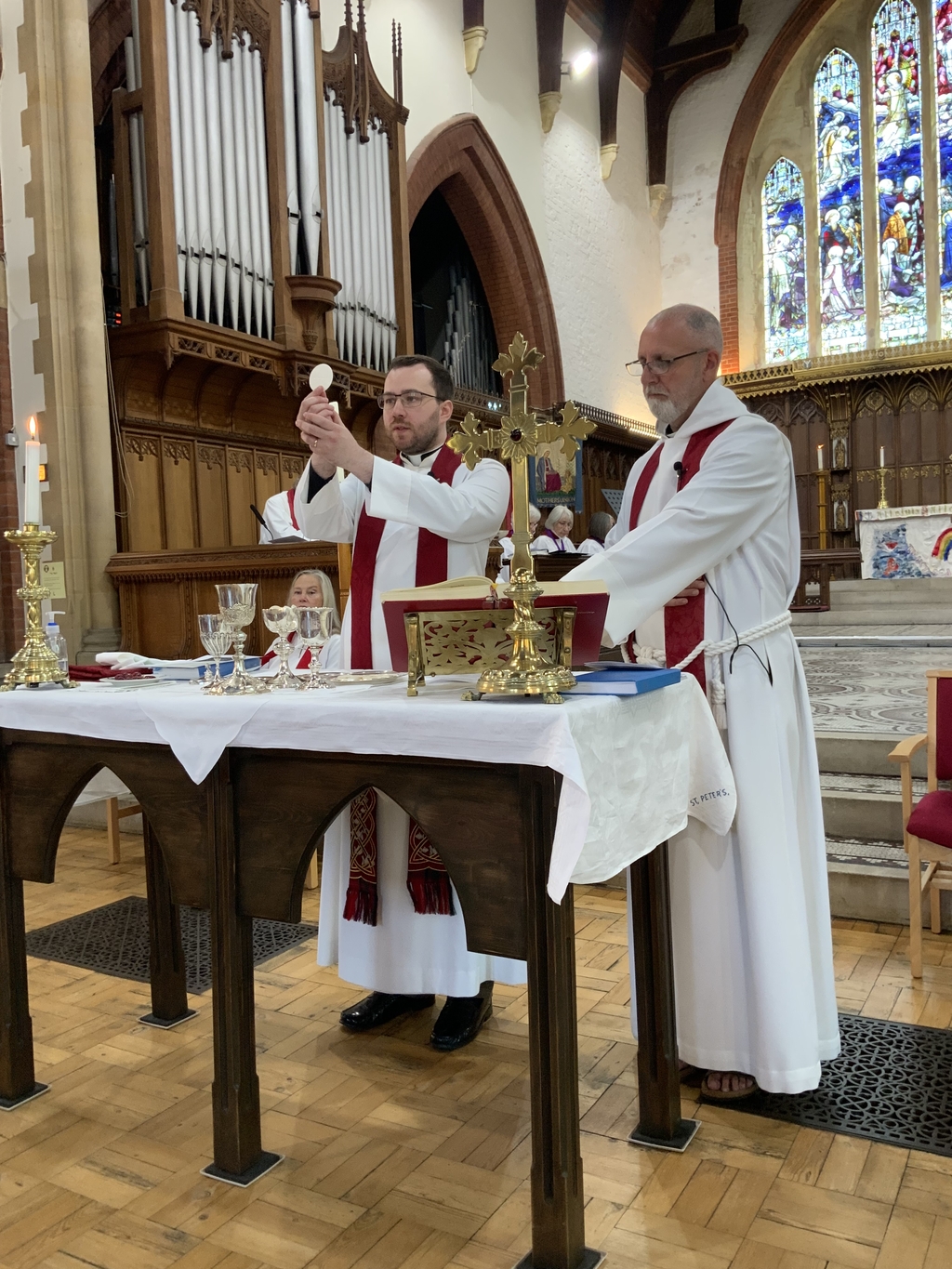
In our Communion Service we acknowledge that all things come from God and of his own do we give him. This means working in partnership with God, remembering God’s provision and the covenant promise that he is our God and we are all his people. When we fail to keep Jesus commandments to love God and love our neighbours as ourselves we fall into danger and peril.
The Tree of Life appears at beginning and end of the Bible, in Genesis and Revelation. The tree of life was planted at the heart of Adam and Eve’s earthly paradise, the garden where they walked with God and all was well. That is until they were tempted and ate the forbidden fruit on the tree of life to become more like God, wanting power and control and the ego was born.
In Revelation our reading tells of the water of life and tree of life producing fruits, leaves for healing and all parts of the tree being utilised (wood, sap, shelter, homes for animals). Jesus worked with wood and referred to himself as the water of life. During his encounter with a woman at a well he told her if she believed and trusted in him she would never be thirsty again. He was referring to our spiritual beings that need water which cleanses, refreshes and renews us. Just as our physical bodies are composed largely of water and need to be hydrated so our spiritual lives need to be constantly permeated and hydrated by the light and love of God, who sheds light in our darkness.
The Bible begins and ends with God’s light in shining in our darkness.
Angela Stewart (Lay Minister)