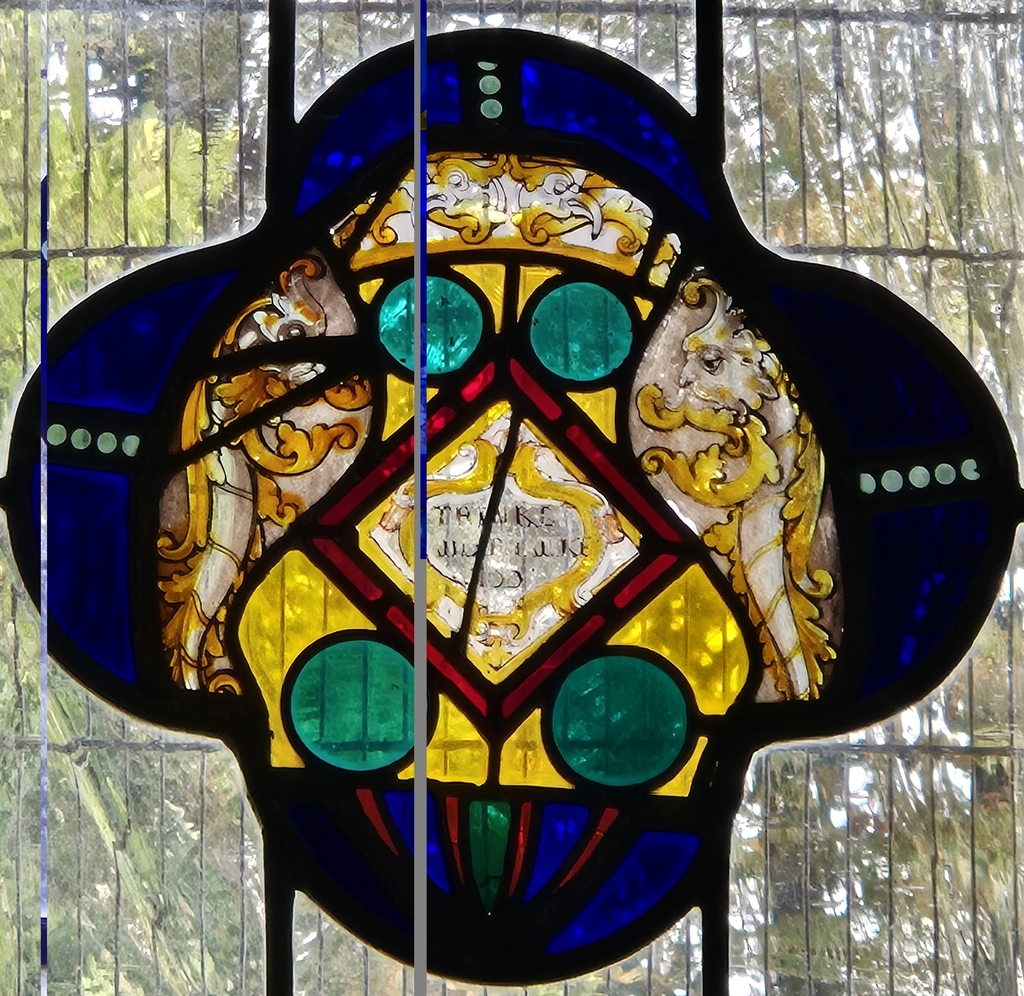
When we hear the word “saint”, what comes to mind? Perhaps a stained-glass window, a statue, or someone whose holiness feels rather out of reach. In stained glass, they even seem to have perfectly tidy clothes—which already puts some of us at a disadvantage. But All Saints Day invites us to look again. It is a celebration not only of the famous saints whose names we recognise, but of that great company of people, known and unknown, whose lives have been shaped by the love of God. Some changed the course of history. Others changed the course of a single life. Some preached to thousands. Others taught a child to pray, cared for a neighbour, or kept loving when life became difficult. Many of us can think of someone like that: a grandparent whose faith was steady; a friend who made room for us; someone who quietly served without expecting thanks. Through them, we caught a glimpse of God’s goodness. Today gives us a chance to be grateful for those lives, and to ask a question: what might holiness look like in ours? In the Beatitudes, Jesus turns our usual ideas about success upside down. He blesses the merciful, the peacemakers, those who hunger for righteousness, and those who mourn. Some of us may remember the misheard line in Life of Brian: “Blessed are the cheese makers.” It reminds us to listen carefully: Jesus invites us not just to admire these words, but to live them. Notice what he does not say, “Blessed are those who never struggle.” Or, “Blessed are those who always know the answer.” And he certainly does not say, “Blessed are those whose lives look impressive to everyone else.” The way of Jesus is not about appearing perfect. It is about allowing God’s love to change us: making us more truthful, more compassionate, more willing to forgive, and more ready to stand beside someone who is hurting. Of course, it is easier to feel patient and compassionate before anyone has actually tested our patience—especially before the first cup of tea. The saints had different gifts and struggles. Faithfulness does not have just one shape: there is room in God’s family for the bold and the quiet, for leaders and those who serve unseen. Our reading from 1 John 3:1–3 gives us the foundation for all of this: the Father’s love, which makes us children of God. That is where holiness begins—not with trying to impress God, but with discovering that we belong to him. We do not have to become somebody else before we can follow Christ. We can begin where we are, as his beloved children. John also reminds us that we are still becoming. Our hope is that when Christ appears, we shall be like him, because we shall see him as he is. If we feel unfinished, we are in good company! That hope calls us to seek purity, as Christ is pure. God’s love gives us confidence to grow more like Jesus. Perhaps today holiness means making that phone call, apologising without excuses, or standing beside someone being belittled. Sometimes it means letting someone else have the last biscuit—not always a small sacrifice! Love becomes real through particular actions, offered to particular people. All Saints Day also reminds us that we do not walk this road alone. The Christian faith speaks of the communion of saints: our belonging together in Christ, across places and generations, and even beyond death. For those of us who are missing someone, that promise can be deeply precious. It does not take away the ache of grief. We still miss the voice, the familiar presence, the ordinary moments we wish we could have again. But we can bring that sorrow to God, trusting that those we love are not forgotten by him. And we can let their example encourage us. Not simply by looking back, but by carrying forward something of the goodness they gave us: their generosity, their courage, their patience, their faith. So today, let us remember with gratitude. Let us give thanks for the great saints of the Church, and for the quiet people through whom we have encountered God’s love. Then let us choose one small act of faithfulness for the days ahead. Not to earn God’s love, but because we are already loved. Not to make a name for ourselves, but to make that love visible. May God give us grace to follow Christ with courage, to love our neighbours with generosity, and to bring hope wherever he places us. Amen.
Harvest Festival Talk Harvest is a moment when the ordinary becomes extraordinary. The apples, the bread, the vegetables, the tins stacked for the food bank — they remind us of God’s generosity. But today, I want us to notice something else: the hands behind the harvest. The farmers. Not just those who grow crops, but those who care for livestock — the shepherds, the dairy farmers, the beef and poultry farmers — all those whose daily labour sustains our communities We rightly thank God for the food we enjoy. But Harvest also invites us to thank God for the people who partner with Him in bringing that food from field, barn, and pasture to our tables. Arable farmers work with the soil — preparing, sowing, tending, harvesting — often battling unpredictable weather, rising costs, and long days. Livestock farmers carry a different kind of responsibility: caring for living creatures day in, day out. Animals don’t take weekends off. They need feeding, checking, sheltering, and sometimes comforting. Livestock farmers know the weight of that care, and they carry it faithfully. Both kinds of farmers live close to the land in a way most of us don’t. Their work is demanding, often unseen, and always essential. And every season, every crop, every new calf or lamb is a reminder that they are working hand‑in‑hand with God’s creation. Scripture often uses the language of sowing and reaping to describe the life of faith. Farmers embody that rhythm more visibly than anyone. Arable farmers know that growth cannot be rushed. You prepare the ground, you sow the seed, and then you trust. Livestock farmers know that care is constant — that life grows through attention, patience, and daily commitment. Both teach us something vital: faith is slow, steady, and rooted in trust. The kindness we show, the forgiveness we offer, the generosity we choose — these are seeds. They grow over time. Farmers remind us that God is at work long before we see results. The gifts we bring today — food for the food bank, donations for charities — are not just symbolic. They are a response to real need in our community. Farmers understand this instinctively. Rural life has always been built on shared responsibility: neighbours helping neighbours, machinery lent, advice swapped, hands offered when storms hit or animals need tending. It’s generosity rooted in reality — practical, humble, and life‑giving. When we give today, we join that same spirit. We say: Because God has been good to us, and because others have worked hard for us, we choose to be good to others. Harvest is ultimately a celebration of hope. The fields don’t stay bare. The seasons turn. New life comes. Farmers trust that hope every year. Arable farmers prepare the ground again, even after a difficult season. Livestock farmers continue to care, even when the work is heavy or the future uncertain. Their perseverance becomes a quiet testimony: God is faithful. And perhaps that’s the message some of us need today. Whatever season you’re in — joy, uncertainty, change, worry — God is still working beneath the surface. Still nurturing. Still growing. Still bringing life. So today, as we celebrate Harvest, may we be people of gratitude, good sowing, generosity, and hope. And may we give thanks not only for the food before us, but for the farmers — arable and livestock — whose faithfulness mirrors the faithfulness of God.