
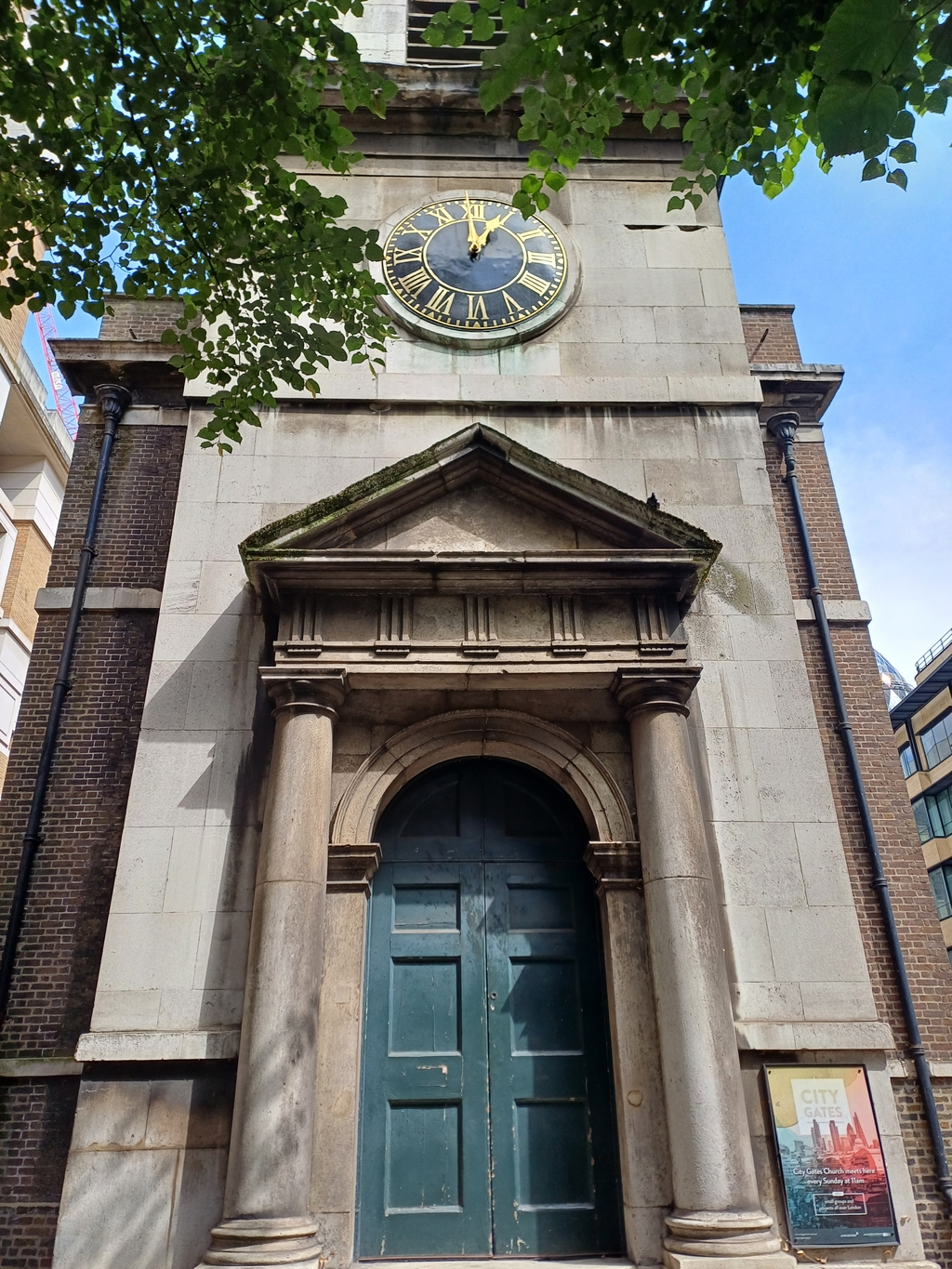
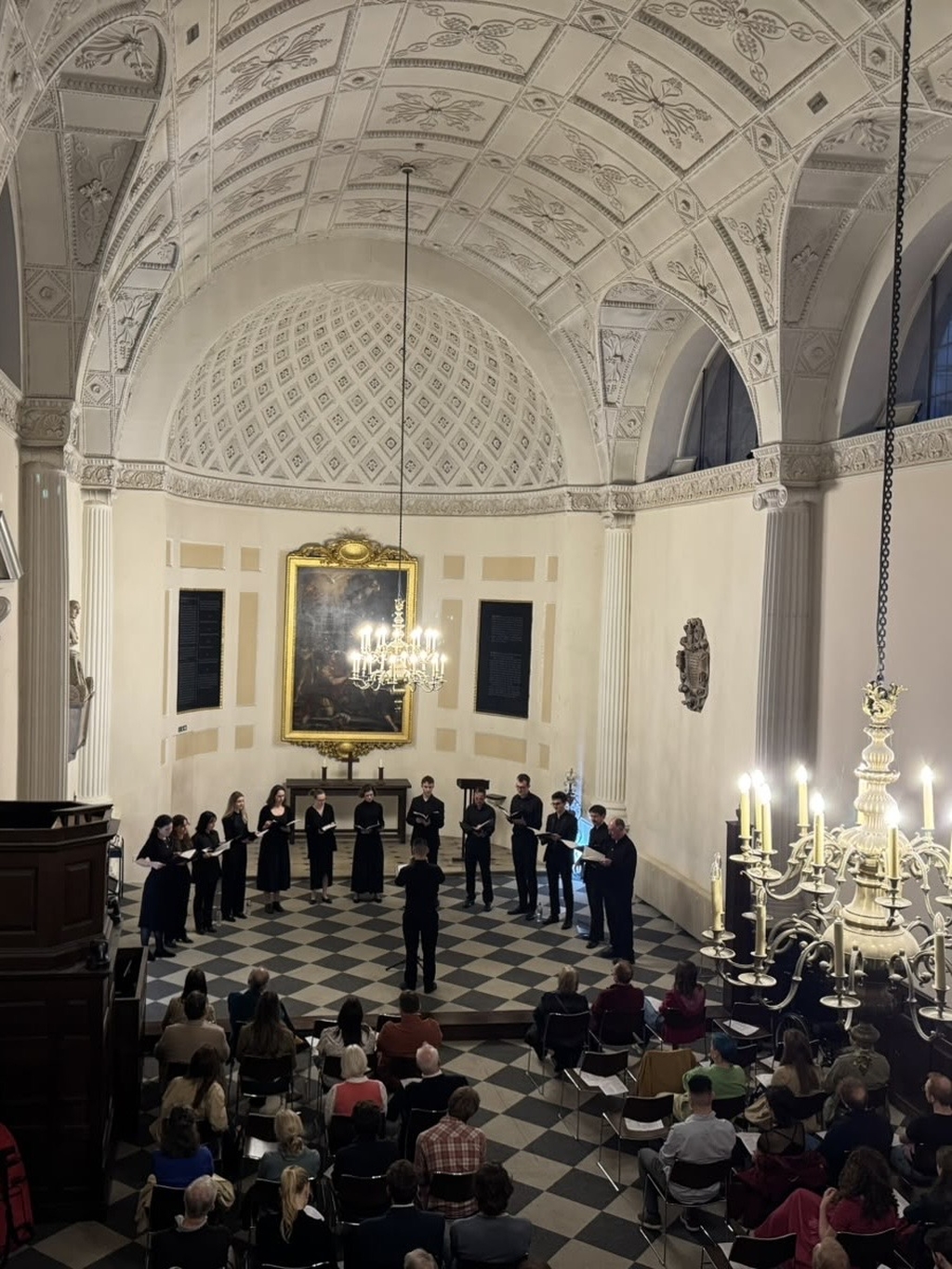
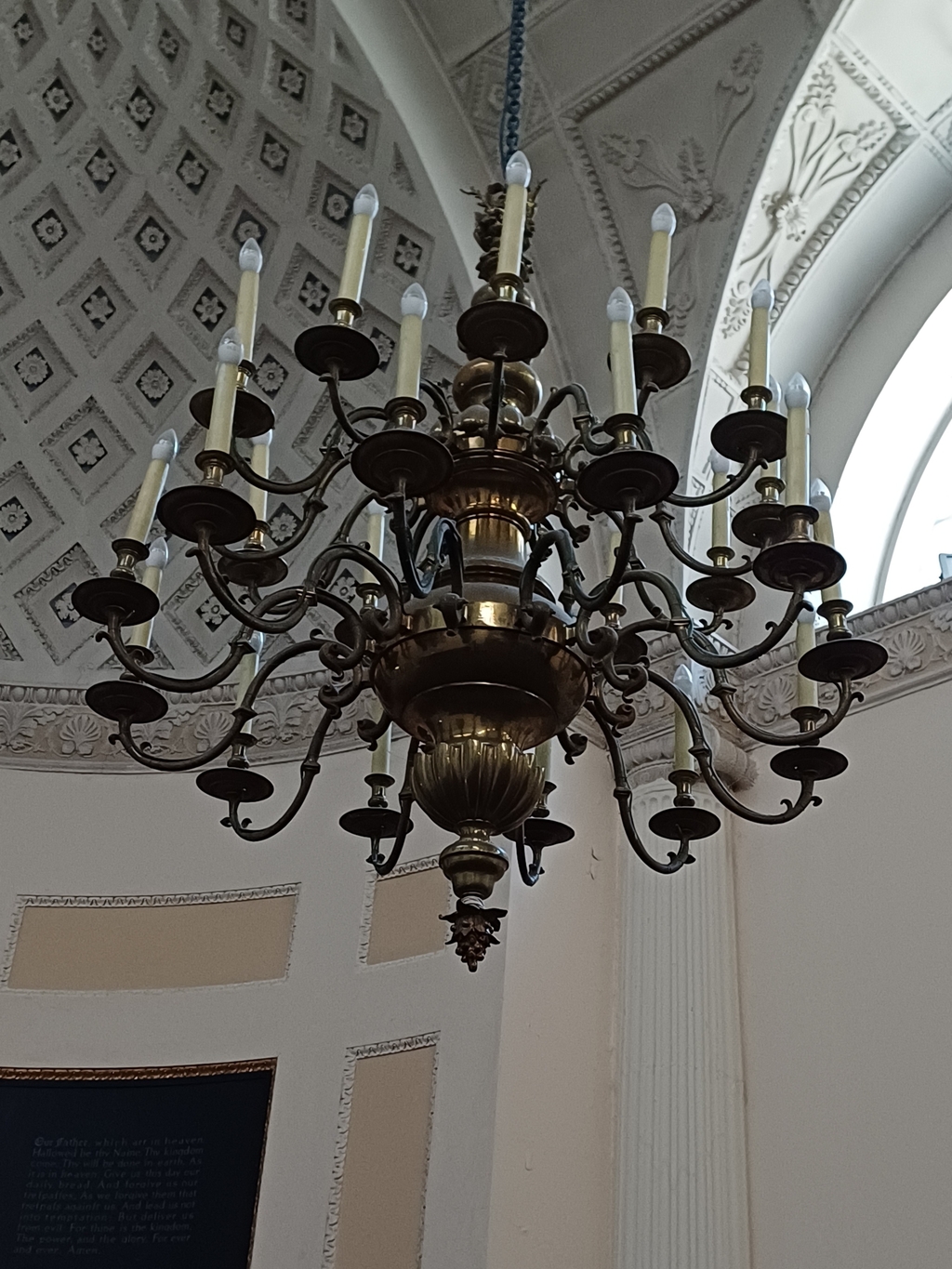
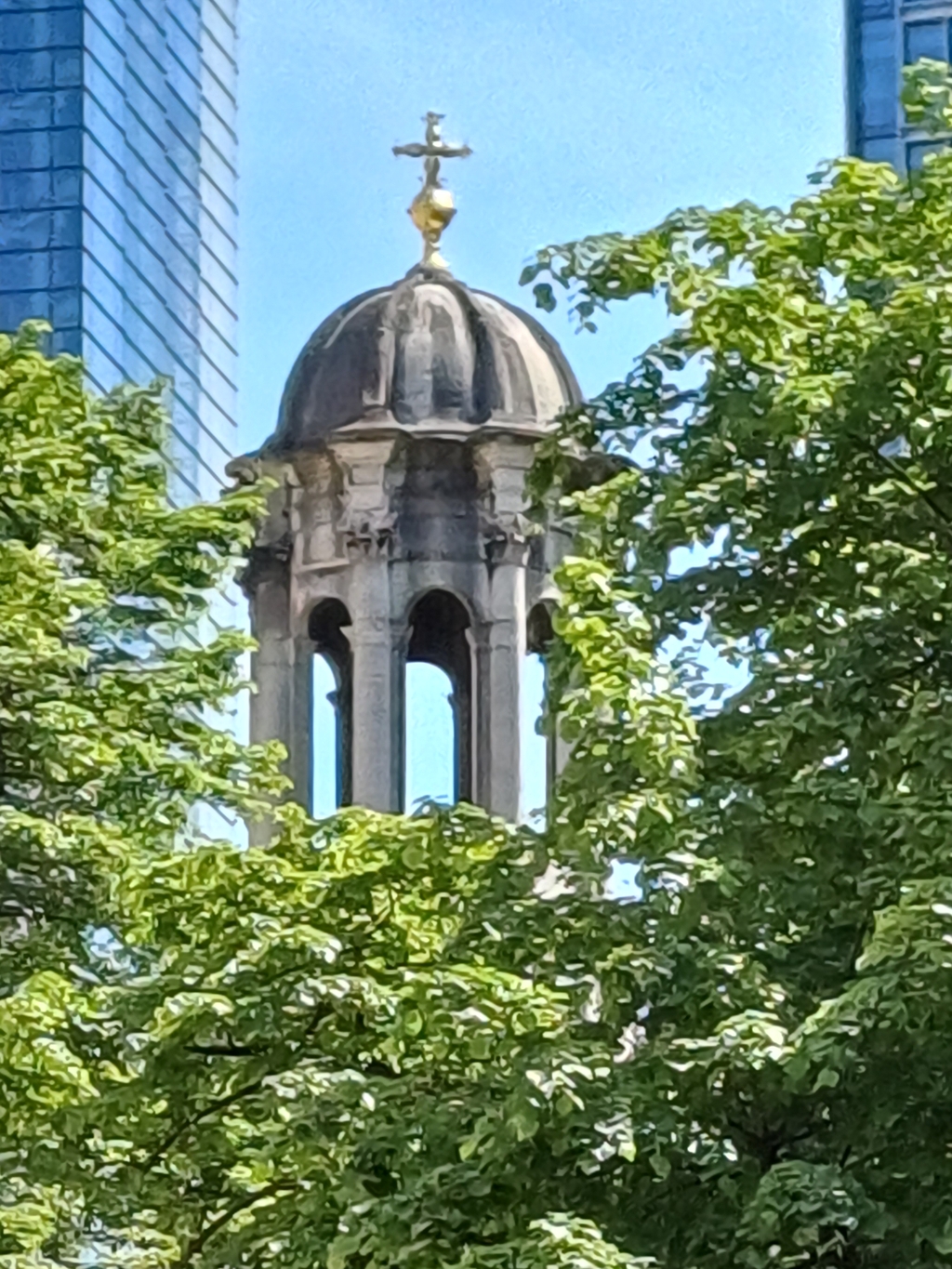
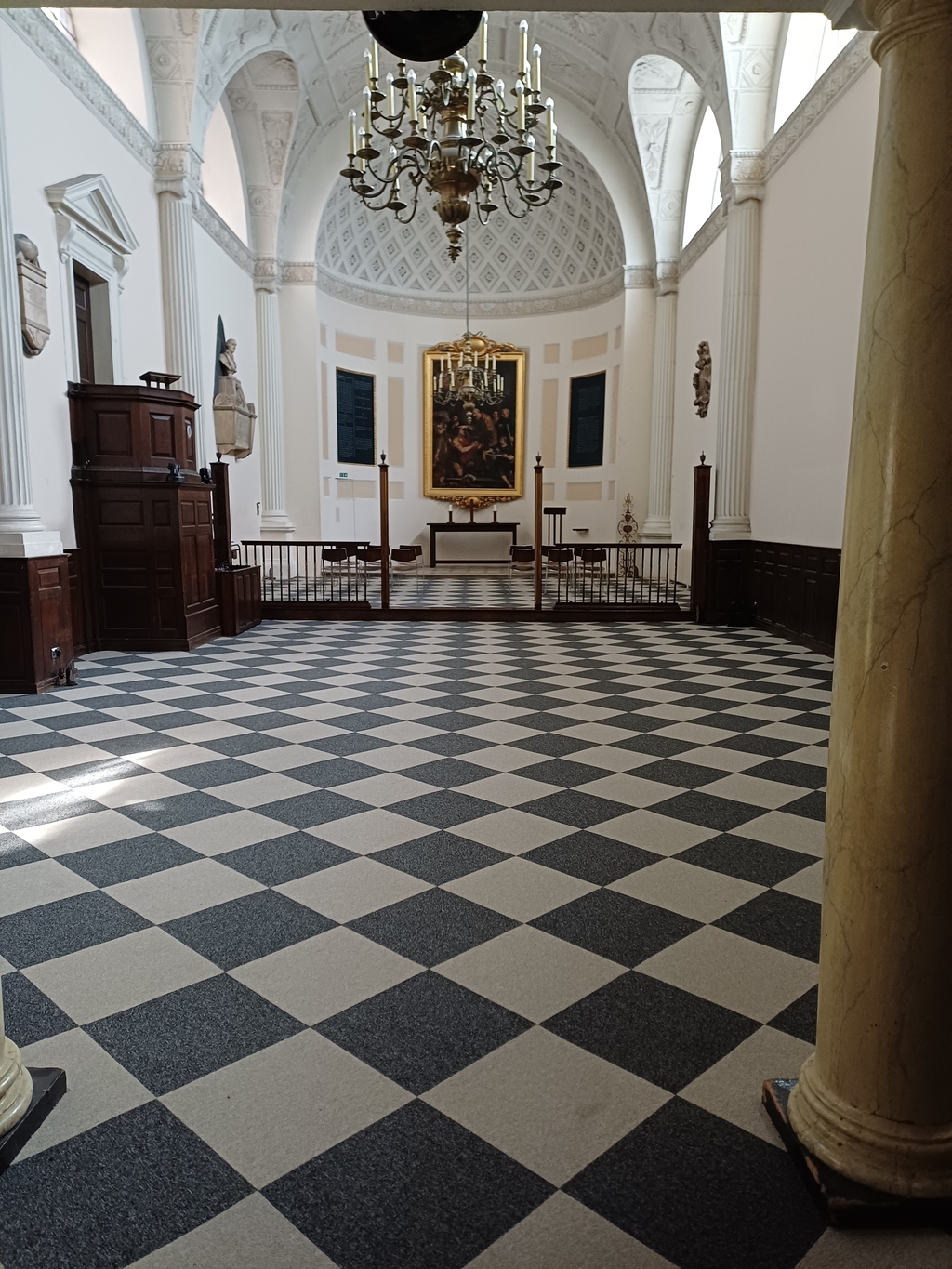
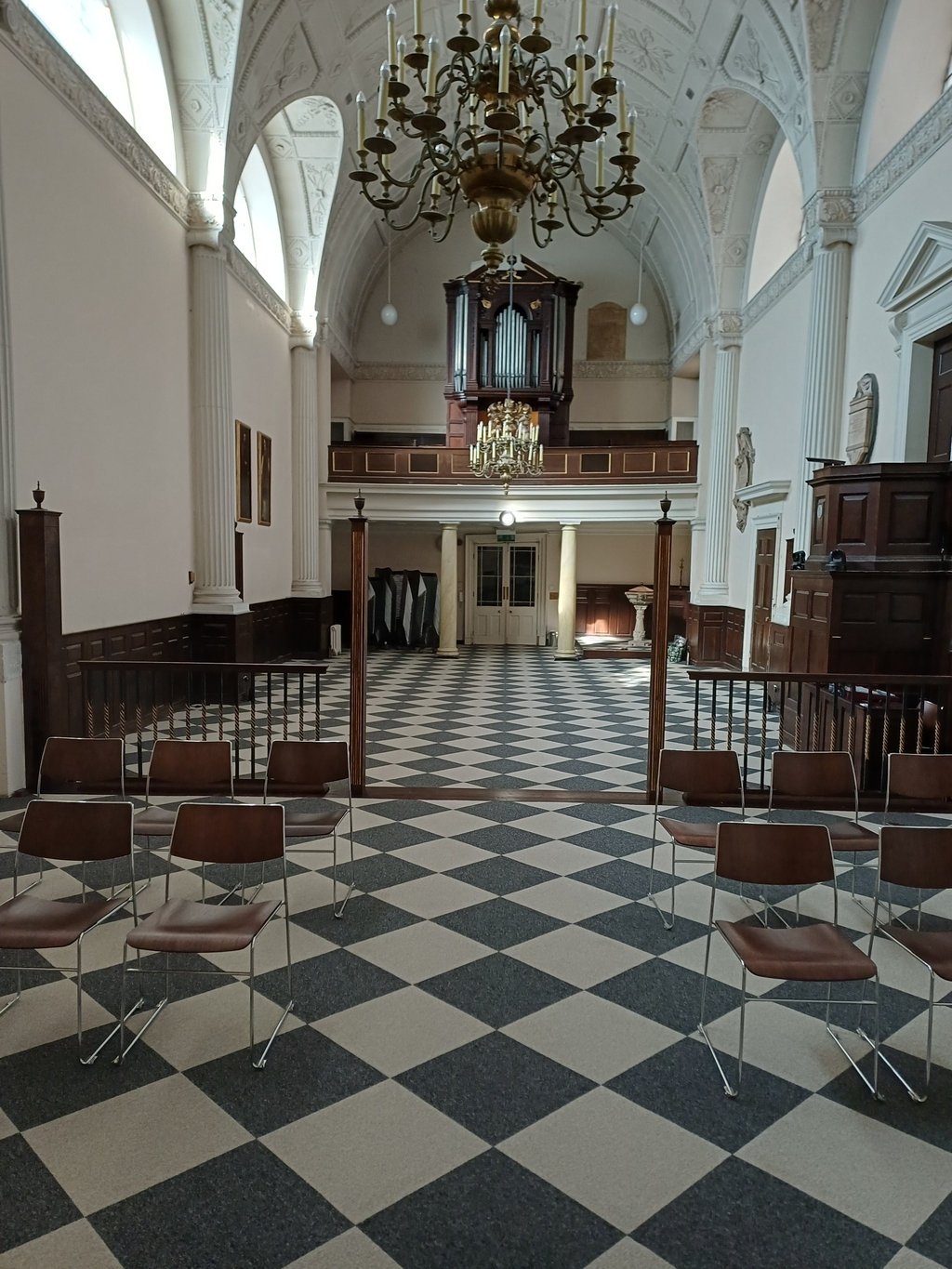
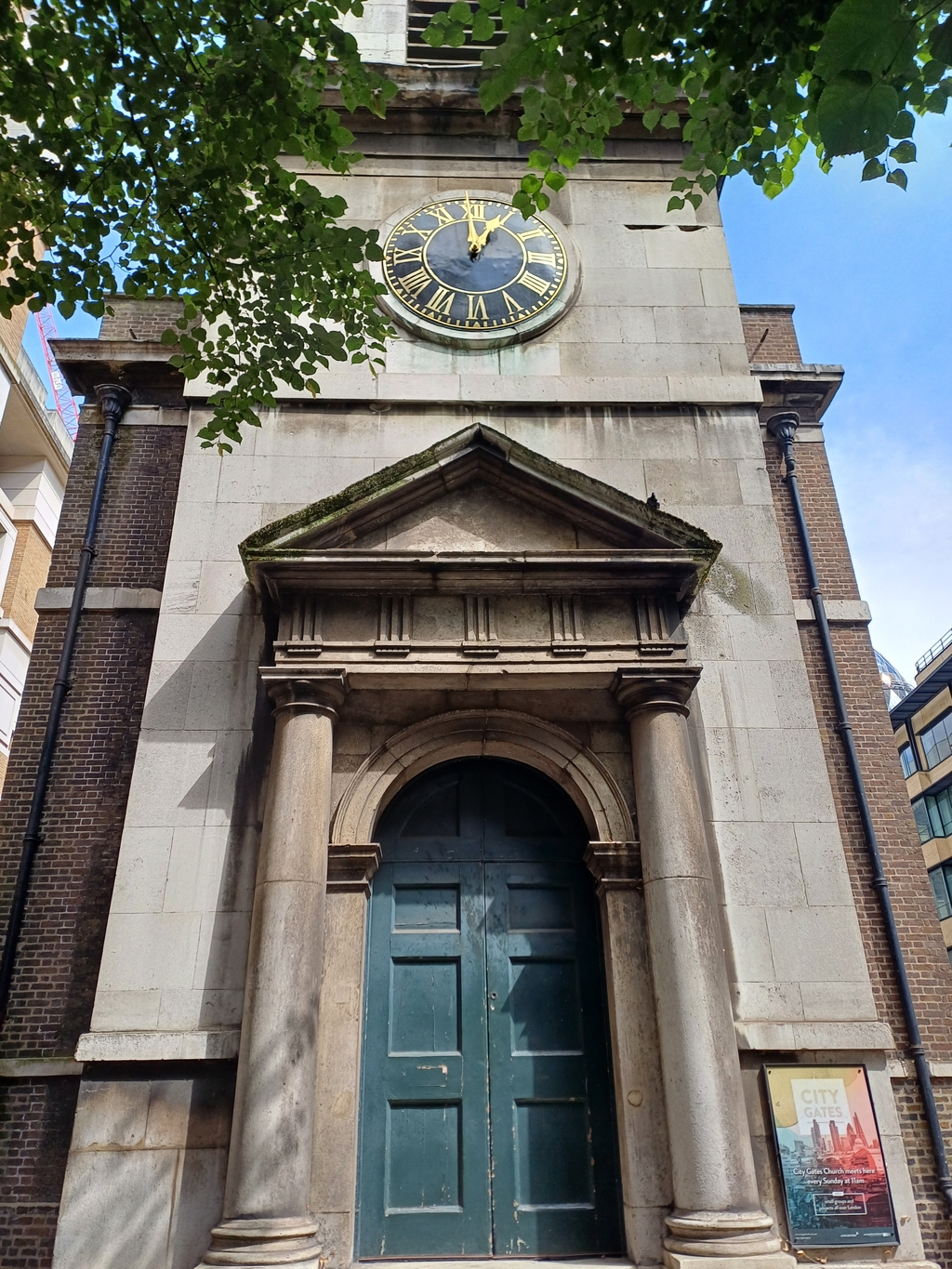
Grade I listed, the existing building was completed in 1765 by George Dance the Younger (1741-1825)—the son of the builder of the Mansion House, and the mentor of John Soane. The old Roman Wall of the City of London runs directly under the north wall of the church nave, so the church is, quite literally, 'on the wall'. The original All Hallows was built around 1120. Although it survived the Great Fire of 1666, it fell into disrepair, so the Carpenters’ Company commissioned a new building from Dance, considered by some to be the first truly neoclassical church in the country.
In the 12th century, the Church was famous for the anchorites (individual hermits) based there, but by the 19th century, it became noted for its mission to the poor, including women in domestic service, who would take the early trains into the City to avoid peak fares. This led to the Vicar of the Church, the Reverend Sir Montague Fowler, 4th Baronet, to provide special services for their benefit and to construct buildings behind the Church to be used as an educational institute. As a result of these efforts, the Church had one of the largest congregations in the City.
After the War, the City of London (Guild Churches) Act, 1952, allowed the Bishop of London to designate certain churches—out of the 50+ which existed within the City of London—as Guild Churches. Their role was, and is, to cater for the non-resident population of London (unlike a Parish Church ministering to those living within its Parish boundary, who were becoming, inexorably, fewer in number). The church and its annex were restored in 1962 and afterwards served as the headquarters for a variety of organisations including the Church Buildings Council, Christian Aid, and the Amos Trust, each of which altered the buildings to serve their own purposes. Regular Anglican worship ceased in 2012.
That is not to say that the church has been empty or dormant, far from it. Perhaps echoing the work of Reverend Fowler, for the past 13 years, All Hallows has been home to XLP, www.xlp.org.uk, an award-winning organisation which mentors around 4000 young, disadvantaged people across the capital each year—many of whom struggle with youth violence, family breakdown, unemployment, educational failure, and substance abuse. In addition, the church hosts an evangelical congregation, City Gates Church, www.citygateschurch.net, whose mission is very much focussed on the needy and excluded. In 2025, All Hallows became the ‘home’ church for the West Indian Regiments of the UK armed forces. The church enjoys the support of the Friends of City Churches, who provide a welcome when the building is not otherwise in use. These organisations fund themselves. So, in one sense, the place is thriving—the building well employed most days with a committed and creative collection of activities, but with ample scope to do more.