
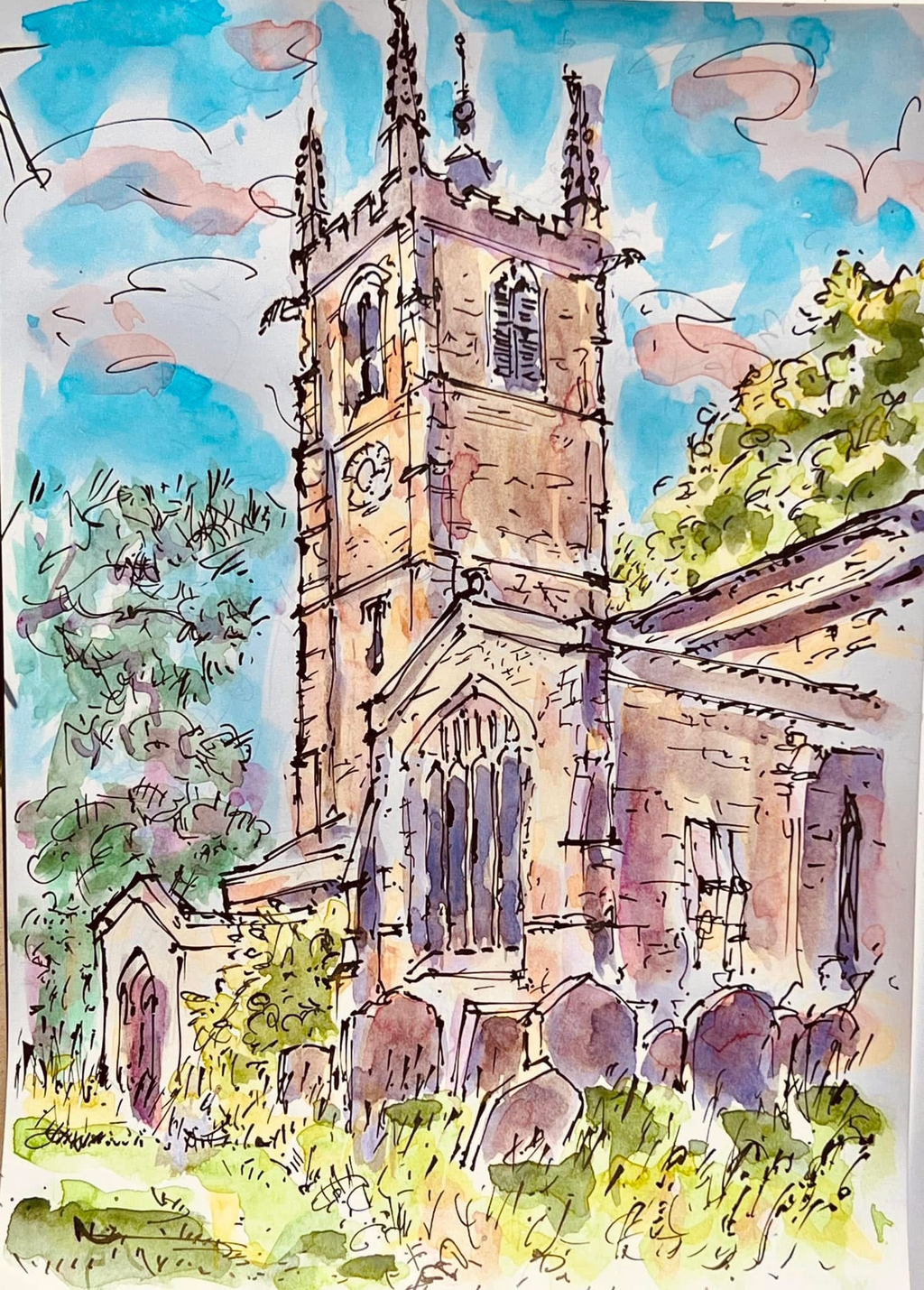



Churchyards and graveyards are important refuges for wildlife while also encapsulating the history of our community. Although some 40% of the UK is covered in grassland, less than 5% of that is 'unimproved', that's to say has not been artificially seeded, ploughed or affected by fertiliser and pesticide use. Historic church graveyards, like that of St James's, can therefore play a vital role in the conservation of wildlife and of our heritage. Management for wildlife needs to be balanced with the other values and uses, past a present, of course, and it's worth noting that churchyards of the past were always a mixture of the well tended and the wild. The Wildlife Trust Churchyard Conservation Awards encourage the management of these spaces for the benefit of all species, including us. St James's churchyard has a Wildlife Trusts Bronze Award, through the Northants Churchyard Conservation Scheme.
CHURCHYARD AT NIGHT EVENT 6-7 JUNE
As part of national 'Love Your Burial Ground Week', we ran informal events on the evening of 6th June, from about 8.30 onwards, and at about 10am on Sunday (after the family service starring Gretton's Mini-Choir). The idea was to both chat and do some hands-on natural history in the churchyard. What we saw and recorded was, as predicted, not great owing to the typical summer weather (cold, windy and wet!), but we saw a few bats (and recorded more) on Saturday, and looked at camera traps, moths and rodents the next morning.
On Saturday evening we had bat detectors, moth traps, camera traps, some footprint tunnels and night binoculars, along with recordings from previous sessions for people to look at and use.
On Sunday morning we looked at (and released) the moths we'd caught in the light traps,identified rodents in the wild mammal traps, had a look at the footprints in the tunnels and reviewed the bat and camera trap recordings.
We'll do more reporting as the results of this and other surveys are anaysed, but a quick summary of the findings from the event can be found here.
Have a look at some of the wildlife blogs below (summarised in our 'Wildlife by the month blogs' 2024-2026) to find out about the kind of animals and plants we've seen previously in St James's churchyard.
BLOGS, PLANS AND POSTERS
Latest Monthly Wildlife blogs
We produce regular 'Wildlife by the month' nature (with a bit of history) notes on what you might see in and around the churchyards. Recent 'blogs' include:
- July 2026: A traditional English churchyard? part 1: 1100-1900. Part 2 to follow!
- June 2026: Bats and other night visitors (Love Your Burial Ground event)
- May 2026: Dawn chorus in May and O' mice an' men (and rats).
- April 2026: Voles, woodmice and Frances Hatton's memorial
- March 2026: Daffodils, vicars and piles - spring flowers in the churchyard, and March hares and Easter bunnies
If you'd like to know when the latest blog is released, follow St James's Gretton on Facebook.
Two years of churchyard wildlife: Two years' worth of our blogs have been combined into one document : 'Wildlife by the month blogs' 2024-2026. Hard copies of this, along with various brochures, maps and guides, can be found on church noticeboards or just inside the church.
Our surveys and plans:
- Our wild churchyard - some background, maps and lists - including surveys of plants and animals
- Biodiversity plan, 2025-26 - our wildlife priorities for the coming year
- Grass cutting and wildflowers plans, 2025 (upper churchyard)
- Churchyard questionnaire - giving villagers and visitors a voice on how we can improve the churchyard for all users
- Guide to the church and a walk around the churchyard.
Posters (that have been up in the church) about:
- Bats - we have several species of bats flying around the churchyard, along with our own colony of soprano pipstrelles in the porch
- Wild flowers - Around 100 species of wild flowering plants, grasses and trees have been recorded in the churchyard
- Moths - a summary from 2023 and list of macromoths identified
- Some background to our churchyard wildlife.
Useful external websites:
- Caring for God's Acre - a charity for Protecting Wildlife, Preserving Heritage, Involving People providing information on the history and natural history of church yards
- Church of England's advice on wildlife in churchyards
- Rockingham Forest Vision - connecting local communities to the natural and cultural heritage of Rockingham Forest and raising its local and national profile; connecting the core remaining wooded areas with enriched biodiverse landscapes.