



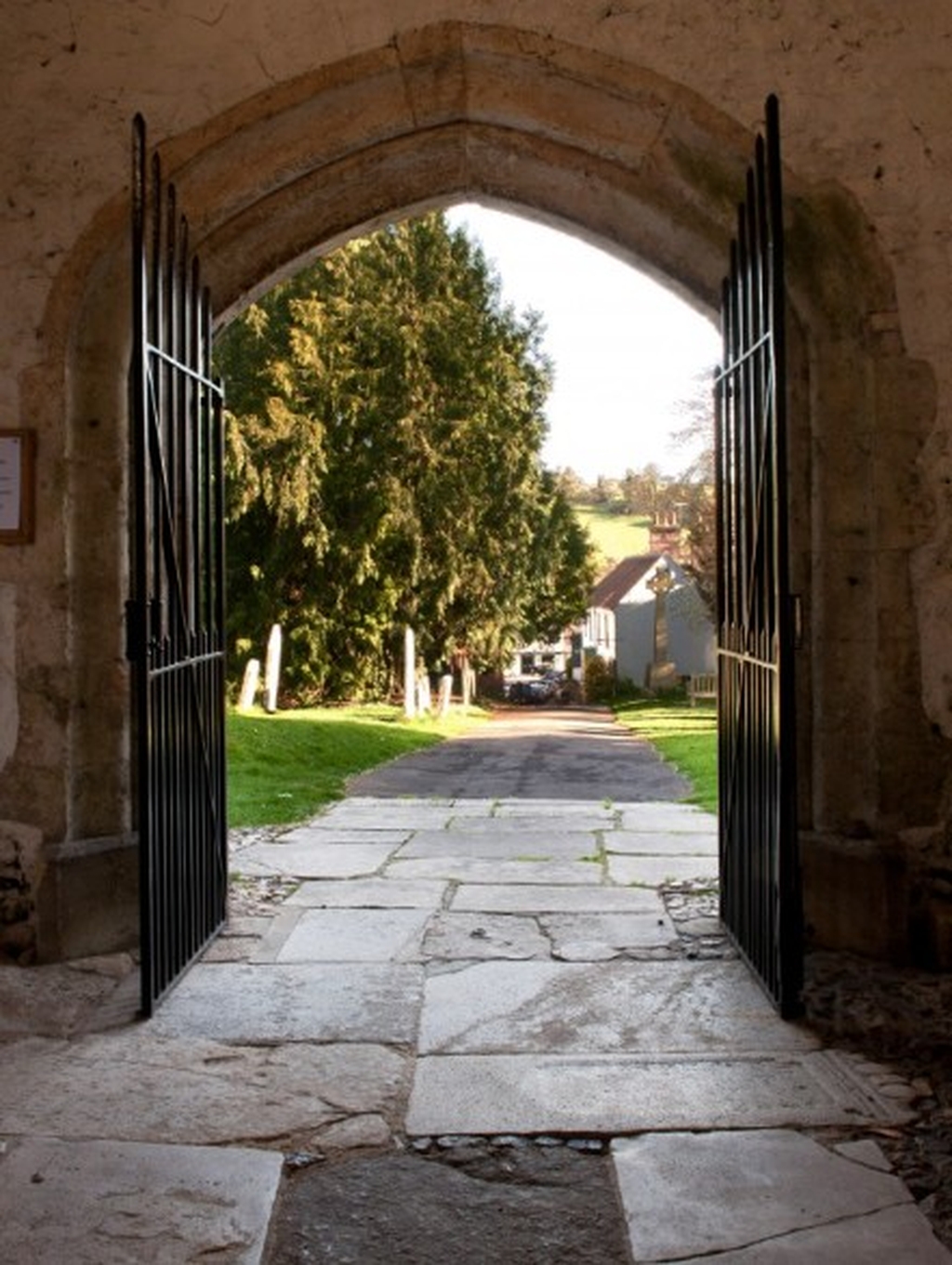
Funerals
Arranging a funeral
When someone we love dies, life takes on a whole new set of challenges. It may be that the one we love has battled long and hard against an illness, or it could be that this has been a sudden loss which no one could have anticipated. Whatever the circumstances, no one can really prepare us for what it feels like.
Because the Church of England is a national church, a vicar may be called in by anyone at any time. This may be during a long illness, when life is ending, or in the immediate aftermath. Very often, the vicar only knows a death has taken place when the funeral director calls. However, the vicar is always happy to be called to support a family during illness, and around hospital stays. The vicar is not informed by the NHS if someone within the parish is ill or in need of support. So please, if it feels appropriate, don't be afraid to call.
You do not need to be a member of the Church of England to hold a funeral in St Peter and St Paul's. This is the Parish Church and is for anyone who lives in or has a family connection to the parish.
Planning
Occasionally, people make their feelings known in advance, and it may be that there is already a written plan, such as hymns already chosen. Oftentimes, however, the family is unsure what to do after a loved one has died. In that case, the vicar can help with planning, so don't hesitate to schedule a visit to chat about what you want.
You can also ask the Funeral Director to liaise with the vicar regarding when they are available and checking that the church (or crematorium) is free. The funeral director will pass on all your contact information, and the vicar will phone to arrange a convenient time to talk about the service.
At the meeting you will be asked about important events in the family history, such as when your loved one was born, which schools they attended, first jobs, their relationships and so on. It is listening to you talk about your loved one that helps the vicar to picture them, tell their story and then choose appropriate readings, poems and prayers. Also, if you have not already done so, to help you choose the hymns or other music you want.
The vicar and our church want to make this difficult time as bearable as possible. We will do all we can to support, care, and carry out your wishes at this time.
Music
When you are organising the music for the funeral of a loved one, it is worth considering the nature of the venue. The Church of St Peter and St Paul has a fine two-manual pipe organ which is effective in supporting congregational hymn singing, choral music and solo organ music. The Director of Music and Organist is highly qualified and will be very happy to assist you in your choice of music. A list of music suitable for funerals is available here, but you may well have alternative ideas which will be accommodated wherever possible. The church has a sound system, and recordings can be played if you would prefer this for the beginning and/or end of the service. It may well be that the deceased person has left detailed instructions for music to be played at the funeral, or that you have a clear idea of what the person would have wanted. The normal number of hymns at a funeral is two or three, although it is fine to have four if you would like to. The church choir is normally available to sing for funerals and can make a significant contribution to the hymn singing. This is particularly important if the congregation will be small, or if you are worried that some of the congregation might be reluctant to sing or unfamiliar with the hymns. Regarding music other than hymns, quiet organ music for the entrance of the coffin is the norm, and often the Burial Sentences are read while this music is being played. At the end of the service, some people choose a joyful piece, while others prefer a more subdued and reflective conclusion to the service. This is entirely a matter of personal choice.A Thanksgiving service is sometimes held to commemorate someone who has died. This service normally takes place some weeks or months after the funeral, and the music for these occasions tends to be more cheerful, although there is of course still scope forreflective choices in both words and music. Do contact Dr Liz Le Grove, Director of Music and Organist, if you would like further information, or to discuss your specific requirements, on 07908 567812; email: [email protected] .More information can be found here: