Chebsey All Saints

WELCOME to ALL SAINTS CHURCH, CHEBSEY.

Our Church

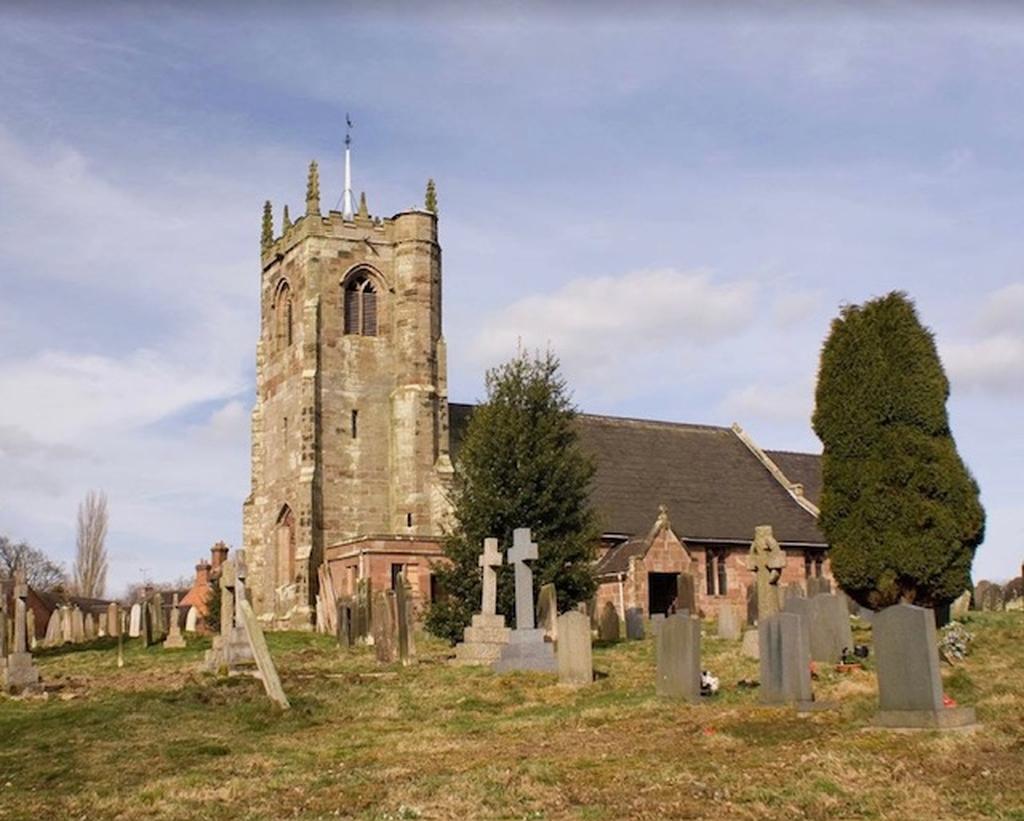
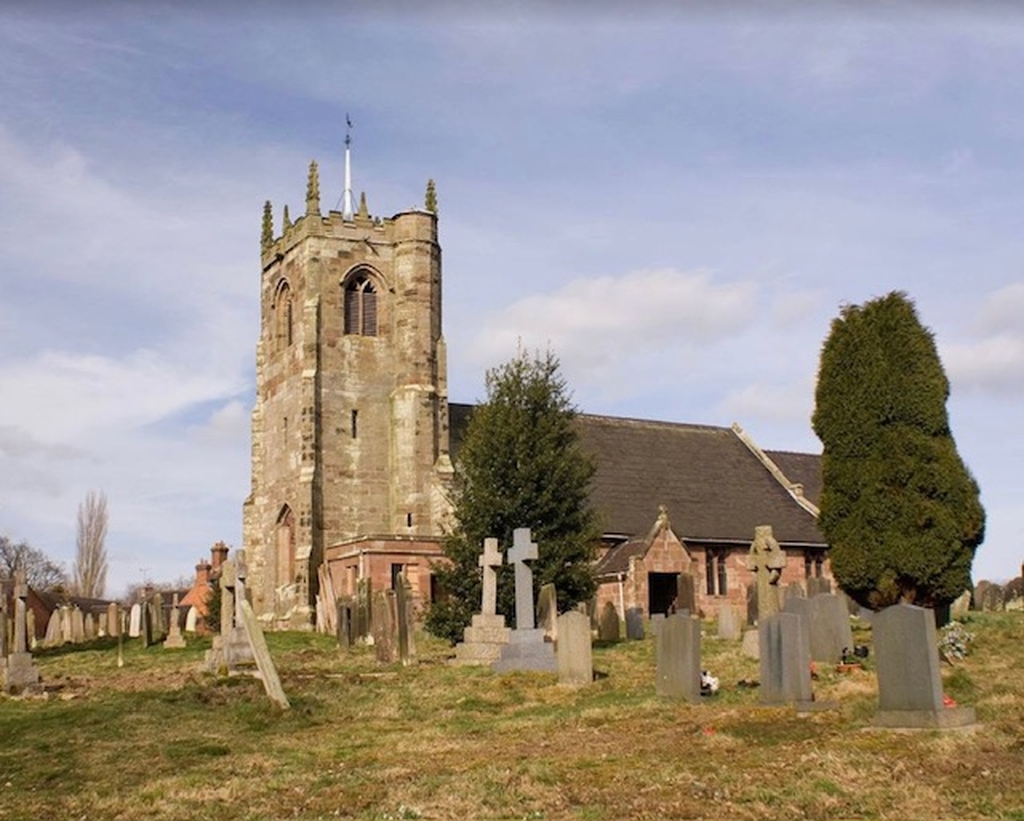
The Chancel and North Wall of the Nave being the oldest part of the present building.

a. Chancel and North wall of Nave: Norman 1070-1170

b. Colonnade and South Aisle: Early English 1200-1250

c. Tower: Decorated 1320-1350. Battlements added later.

d. Vestry: Modern.

Craftsman's Marks - The Colonnade strikes you as you enter the church, as you stand under the Arch just inside the door, and then look up at the stones forming the Arch above your head, you will see that each individual stone carries a Mason's Mark in the form of a small triangle. The right-hand buttress also shows the Master Mason's Mark in the form of a Maltese Cross. The tradition of Craftsman's marks continues and if you look at the bookcase (to the left of the door by which you came in) you will see that this is a beautiful example of modern joinery in oak, hand-made by Mr Thompson of Goathland in Yorkshire. His mark is a small mouse, carved on every piece he made, and you will not have far to look to find it on our bookcase.

If you now move back to the back of the church, to the base of the Tower; looking East you will notice several things.

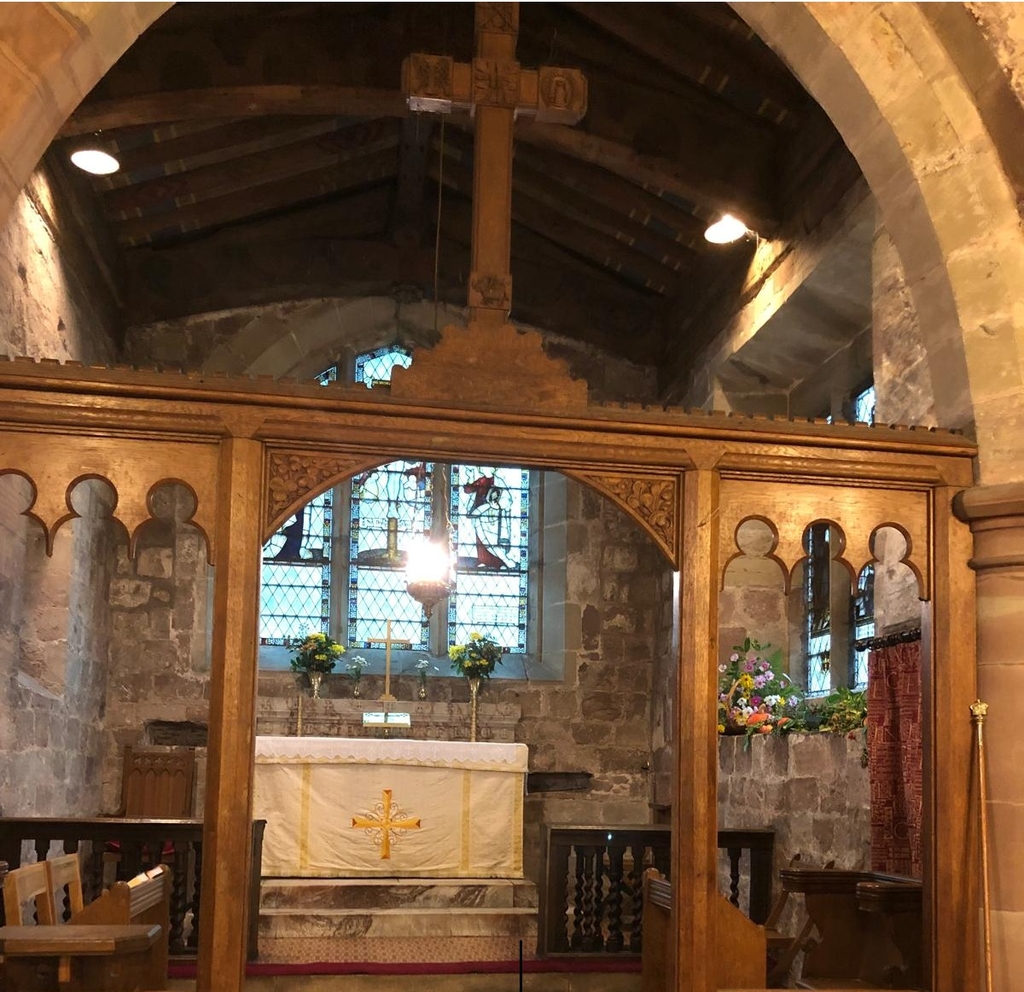
1. The beauty of the Medieval Roof. This is not the original roof, which was much steeper in pitch and the marks of where it used to can be clearly seen from outside the church on the East wall of the Tower. The present roof probably dates from the time when the South Aisle was added to the Norman Nave.

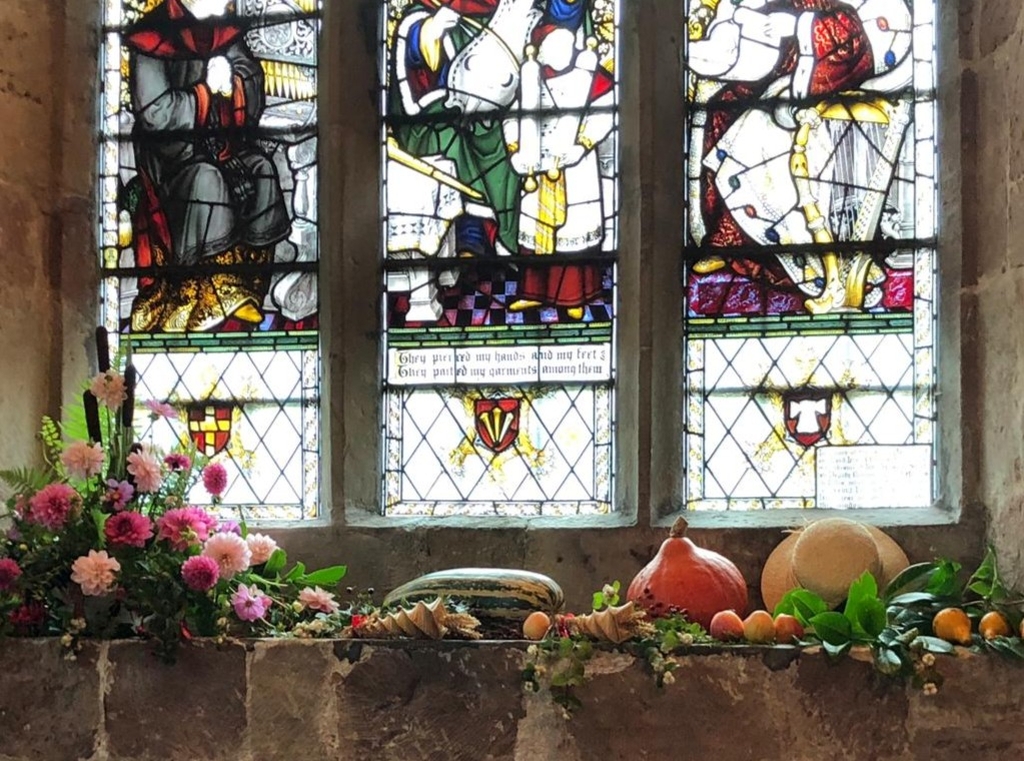
2. The East Window - installed in 1901. This is the work of Kemp, the outstanding artist of his day. There are two more of his windows here, installed nearly 20 years later - the one in the South Wall of the Chancel, the other in the West Wall of the Tower, where you are now standing. Both are the work of a partnership - Kemp and Castle. Every Kemp window, somewhere in the design bears Kemp's personal mark; a wheatsheaf. In the case of Kemp and Castle the wheatsheaf is still there but superimposed on the head of the sheaf is a castle (of the type used in chess). On all three of the Kemp windows in this church the wheatsheaf can be found in the left-hand margin of the window. You may like to look for them - and if you see a similar wheatsheaf in windows of other churches you will know that once again you are looking at a masterpiece by Kemp. Sometimes the wheatsheaf is woven into the main design and not as easily found as those here.

3. Still in the base of the Tower, notice the very fine Memorial Tablets on the South wall.

The one to Commander Noel is of especial interest: not only because of his direct descent from the founders of Ranton Abbey (about 5 miles west of Chebsey) but because his family for many years lived at Hidcote Hall within this parish. Two family tombs dating from the time of Elizabeth 1, are within the body of the Church.

4. No doubt you have noticed the Bell Ropes. There are 4 bells, 3 of which date from before the Reformation, bearing the inscriptions:-

a. SANTA MARIA ORA PRO NOBIS

b. SANCTA HELENA OR PRO NOBIS

c. S. MARIA

d. The fourth bell bears the inscription: Thos. Johnson, Edwd. Musgrave. Wardens
T.R. 1775.

In the Church Accounts for 1775 are two items relating to this bell:

James Myatt for carriage of the bell. 4/- and Thomas Rudhall for recasting a bell E10-6-0.

Three other entries relating to the Ringers may be of interest:-

a. 1746-47 Allowed the ringers for the conquest of Culloden Moor 3/-.

b. 17 September 1761 Allowed for ringing on King's Coronation (George 111) 7/6.

c. 1841-2 Ringers celebration of birth of the Prince of Wales (later to be Edward V1110/-


Moving down the Nave notice the Early English Chancel Arch (circa 1200) and the two Norman Doorways in the

extensive restoration and alteration took place in 1897, during which were found:-

a) Two carved imposts* stones of Norman date.

Impost- 1) The upper course of a pillar or abutment frequently projecting in the form of an ornamental capital or moulding, on which the foot of an arch rest.

Impost - 2) A horizontal block, supported by upright stones as at Stonehenge.

b) Beneath the Nave Floor a stone coffin without a lid.

c) In the South wall of the aisle, used as and masoned for a window head, a beautifully carved Coffin Lid of 13th century date, which exactly fitted the stone coffin referred to as item (b).

At the same time the entrance step to the church being much worn it was taken up to be replaced, and the underside was found to have been a carved memorial stone, this time bearing upon it the effigy of an ecclesiastic of early workmanship.

Notice also the two Norman Lancet Windows, one in the Nave and the other in the Chancel - only 7 inches wide at their outer surface. They are now filled by very modern glass, being Memorials to the Rev Lumley, vicar of Chebsey from 1930 - 1942 and to his wife. The decoration of the beams in the Chancel Roof dates from the 1897 restoration.

Have a closer look now at the very fine East Window by Kemp and the South Window by Kemp and Castle.

The right-hand half of the Altar Rail bears the inscription WN:/H 1682

The oldest memorial in the church is a Brass Plate on the Chancel Floor (on the South side) bearing the inscription:-

"Here Iyeth the body of Walter Noel of Hilcote, Esqr - in the Parish who was buried the second day of July 1627 and also the body of Elizabeth his wife was buried the 23rd day of November 1677"

Leaving the Chancel and moving down the Nave:-

To the left is the Organ. Installed in 1901 as a Memorial to Queen Victoria. The cost was about £240.00 all of which was raised by public subscription.

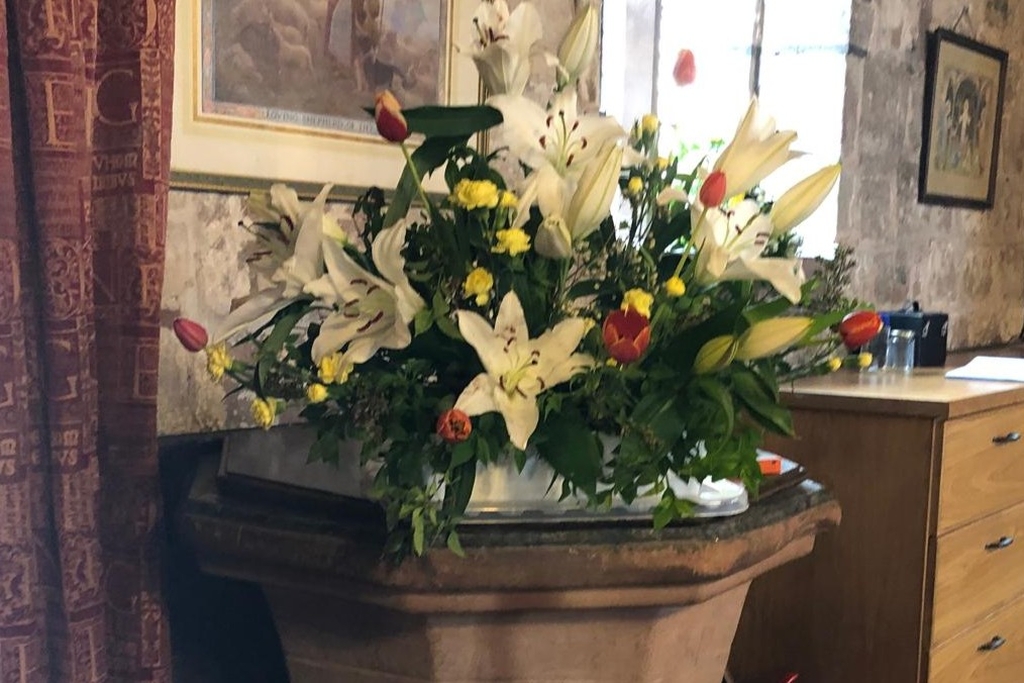
To the right of the door is the Font. This is of early English character and is intact. The underside of the lead lining of its bowl has incised upon it "JOHN LESET, 1704" probably the name of the plumber.

ALL SAINTS CHEBSEY - OF INTEREST OUTSIDE THE CHURCH

a. The Turret Stair external to the Tower, which is unusual.

b. The marks of the earlier roof on the East Wall of the Tower.

c. The remains of an Ancient Cross in the churchyard - to your right as you go towards the road. This is a scheduled monument, but experts disagree as to just how old it is. The Birmingham Archaeological Society Transcripts for 1945-46 say that ‘the degeneration of the ornament points to a date in the middle of the 11th century.’
The village War Memorial, also in the churchyard, is based on what is believed to be the original design of our ancient cross.
The churchyard contains war graves of a soldier of World War 1 and an airman of World War 2

d. Aged 72
Afflictions sore long time I bore, Physicians were in vain,
Till God did please to give me ease And free me from my pain.
Betty Cliff 1795 Aged 19
Repent in time, make no delay Death in my youth called me away I left a Father and Mother dear Specimens of Epitaphs::
Thomas Bate 1848 Aged 49


By fond affection to thy friends endeared

For faith and works by all revered Go, happy spirit, to thy realms above, And rest forever in thy Saviour's love.


William Pickin 1816 I hope to meet when Christ appears.
Ann Robinson 1811 Aged 55
Grieve not my friend, nor children dear, I am not dead but sleeping here;
As I am now, now so you must be,

Prepare in time to follow me.

Get in touch

Henry Hutsby

Henry Hutsby (Church Warden)
01785 561951
John Green (Church Warden)
01785 760355