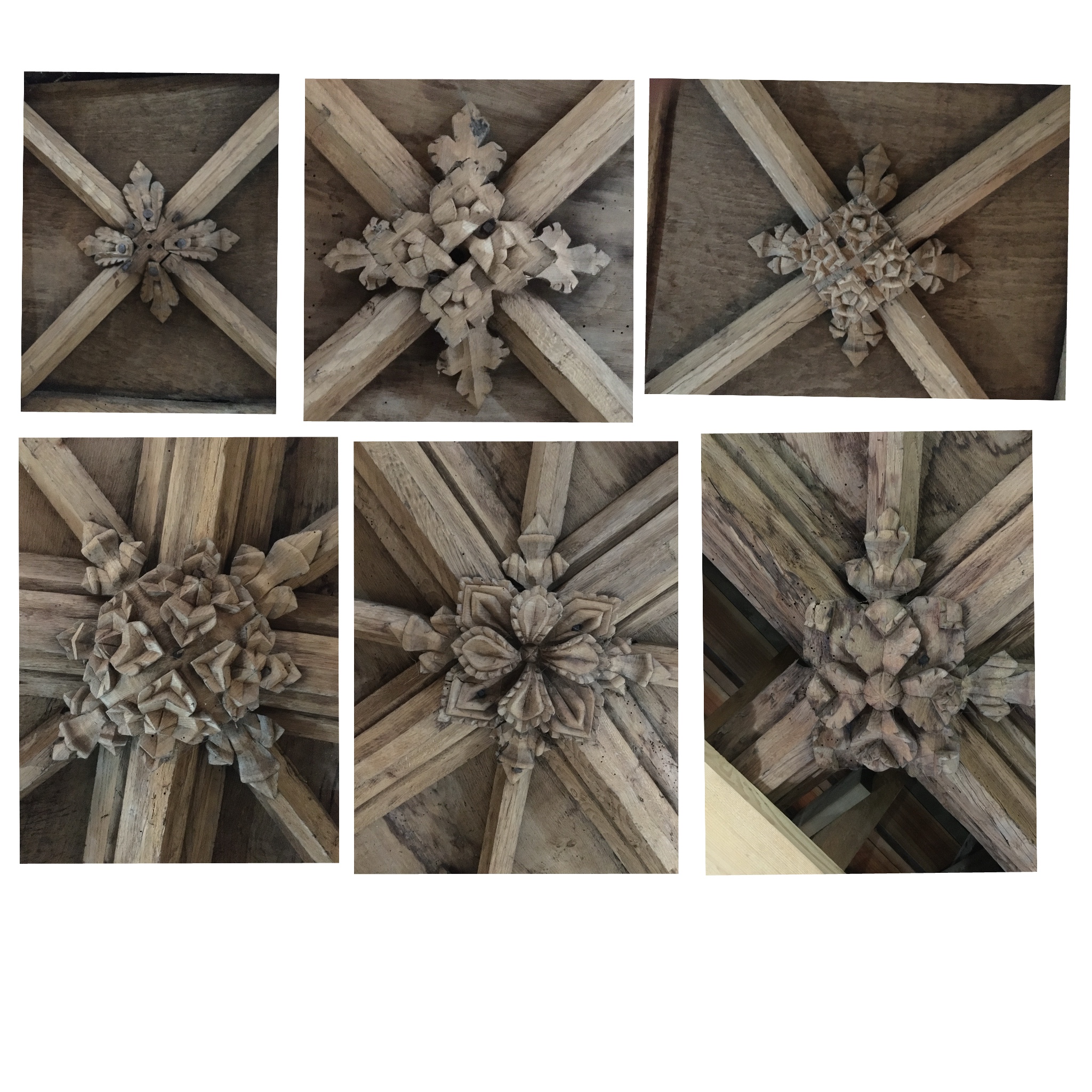
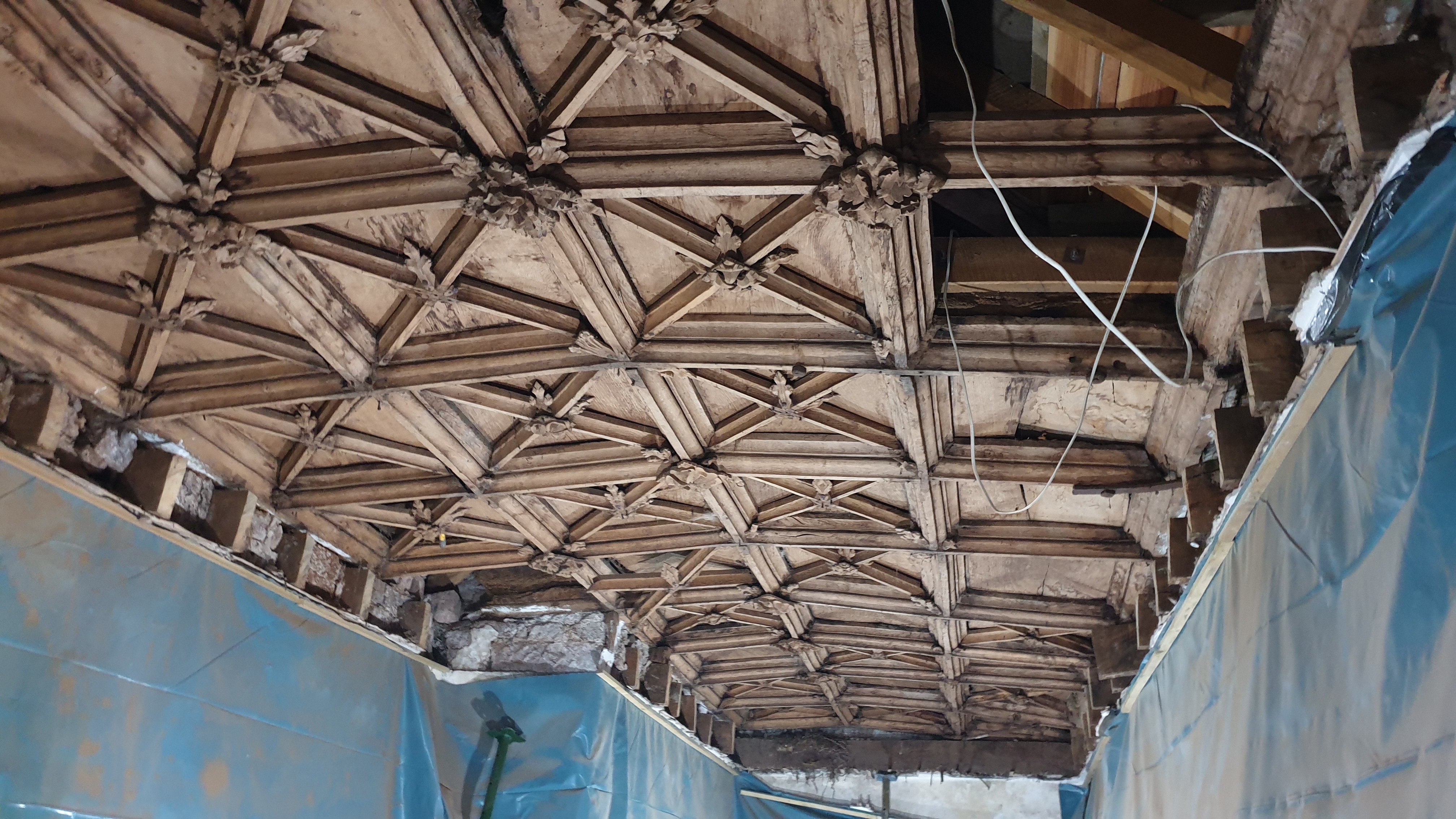
The medieval aisle ceilings were discovered in late 2019 during the redecoration of the church, hidden under lath and plaster. They appear to have been covered over around 1810 when internal work was being done in the church.
The fact that they remained hidden and were not “restored” when the church was re-ordered and extended in 1862-3 makes them unique, and leading experts have described them as “remarkable” and “of national importance”.
A dendrochronology survey has shown that the ceilings date from the latter years of the 15th century and formed a part of the present church that was built around this time.
The dendrochronology dating also shows that the timber forming the ceilings of both aisles came from trees felled at the same time. It is evident, however, that two different carpenters were working on the north and south aisles and they show an important transition in jointing techniques.
It would appear that the oak ceilings were never intended to be painted. Having been covered over for so long, the oak has retained its original colour. The carving is of goodquality and the ceilings are excellent examples of joinery of this period.
The intention is to repair and conserve the ceilings while retaining their originality as far as possible. Once exposed and the scaffolding removed, they will greatly enhance the beauty of the interior of this Grade I Listed church.
Our sincere thanks are due to:
The Cathedral and Church Buildings Division of the Church of England for a grant towards the initial survey
Historic England for sponsoring the dendrochronology survey
Sara Hilton for her advice on the application to the NLHR
The Diocesan Buildings Office for their advice and support
Jonathan Rhind, architects, for a survey of the aisle roofsThe National Lottery Heritage Fund and the National Lottery Players for funding this initial investigation and planning phase.