Early Life and Retreats
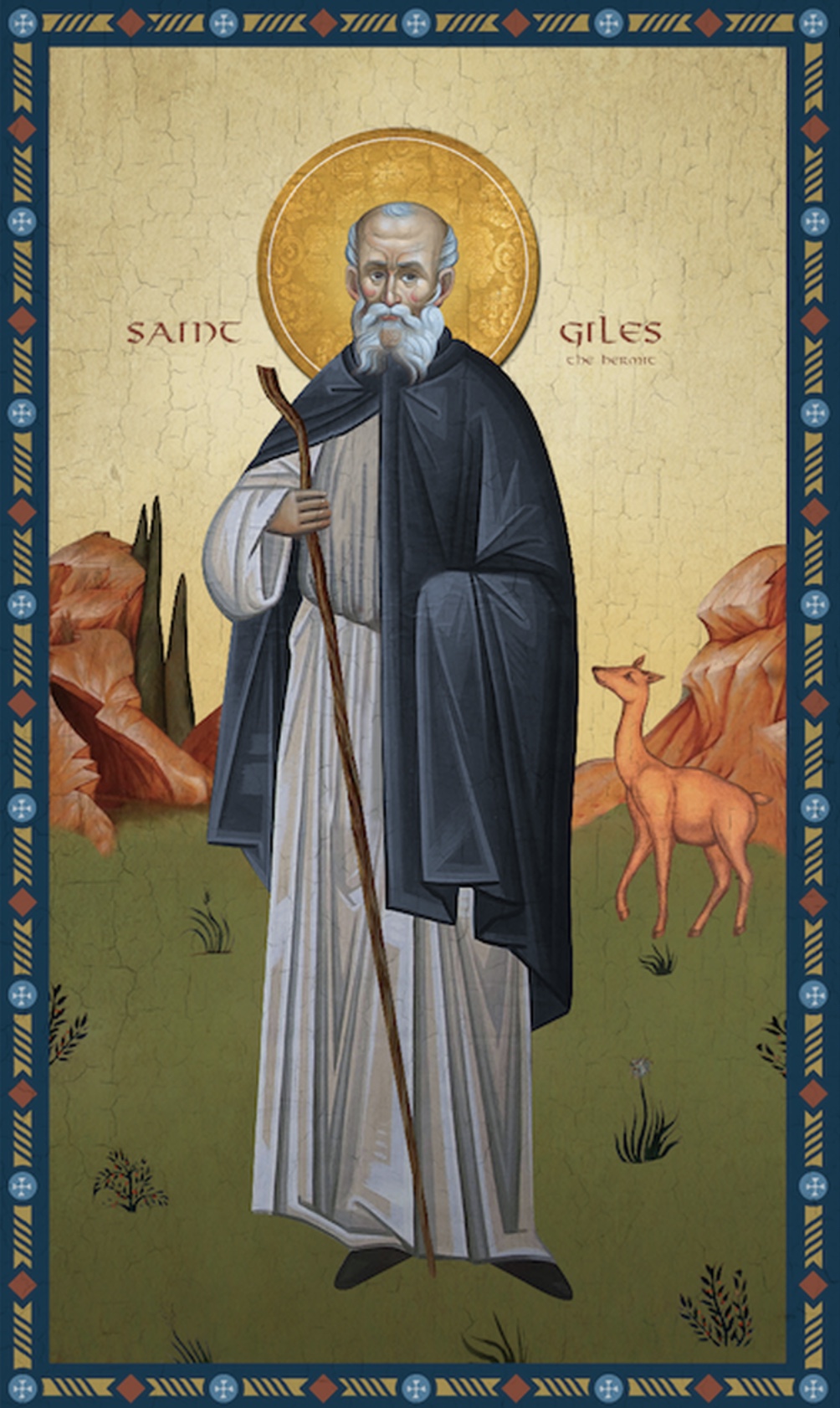
Saint Giles, believed to have been born around 650 and to have died circa 710, spent his early years in seclusion near the mouth of the Rhone River and by the River Gard in Septimania, a region in southern France. Seeking greater solitude, Giles withdrew deep into the forests near Nimes, where he lived for many years, accompanied only by a red deer. According to tradition, the deer sustained Giles with her milk. Giles adhered to a Christian vegetarian diet throughout his time in isolation.
Discovery and Patronage
Giles’s secluded life was eventually interrupted when King Wamba’s hunters, pursuing the deer, discovered his retreat. During this encounter, an arrow intended for the deer wounded Giles instead. This incident led to Giles being recognised as the patron saint of the physically disabled.
Monastic Legacy
King Wamba came to hold Giles in high esteem, admiring his humility and his refusal to accept honours, except for welcoming some disciples. In tribute, Wamba built a monastery in Giles’s valley, Saint-Gilles-du-Gard, which Giles placed under Benedictine rule. Giles spent the remainder of his life there, gaining a reputation for sanctity and performing miracles. He died in the early part of the 8th century.
Patronage and Veneration
Saint Giles is revered as the patron saint of the physically disabled (historically referred to as “cripples”). He is also invoked for protection against childhood fears, convulsions, and depression, particularly in Normandy. Initially, he was called upon as a protector against the Black Death.
Symbols and Feast Day
In medieval art, Saint Giles is commonly depicted with his symbol, the hind (deer), and his emblem is an arrow. His feast day is celebrated on 1st September.