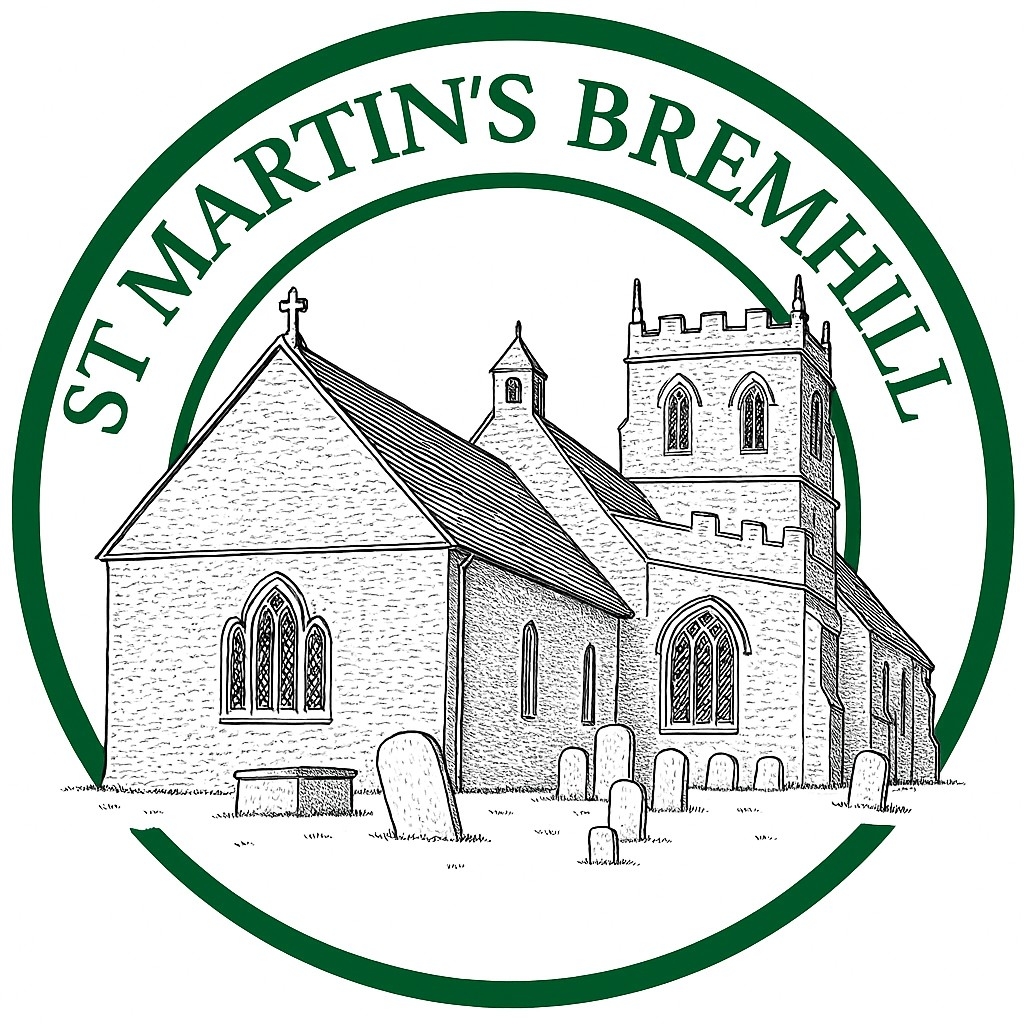


800 years of history.
Welcome to St Martin's Church, Bremhill, a place of worship whose history stretches back more than a thousand years. The site preserves unmistakeable traces of its Anglo-Saxon origins, most clearly in the long and short stonework set into the north-west corner of the nave, a rare architectural survival that signals an early pre-Norman church on this ancient hilltop settlement. the present building took shape in the early 13th century, when the nave and chancel were rebuilt in the developing Early English style, giving St Martin's much of the graceful character it retains today. Its strong 14th century tower, with characteristic perpendicular openings and thick masonry, has remained virtually unchanged for over six centuries and continues to anchor the parish landscape.
In the decades following the Glorious revolution of 1688, St Martin's entered a period of renewed Anglican stability under Reverend Benjamin D'Aranda, one of the first incumbents appointed in the new constitutional settlement. His long ministry helped re-establish Prayer Book worship after years of national upheaval, and his life is still honoured within the church by the tablet set into the aisle, one of the earliest memorials to survive here and a tangible link to the post- Revolution parish.
The major restoration of 1850 renewed the interior, yet carefully retained the magnificent medieval pew ends, remarkable examples of late medieval craftsmanship and among the church's most distinctive features. A further phase in 1864 strengthened the structure while respecting the medieval plan. St Martin's is also associated with the poet-priest William Lisle Bowles, vicar from 1804 to 1850, whose literary reputation brought visitors from across England. Today the church remains a cherished centre of faith, memory and community life.